
Local Angles
Keeping Your Heat On in a Western New York Blizzard
By John Gach, owner of Vantage Heating and Cooling · Published · Updated
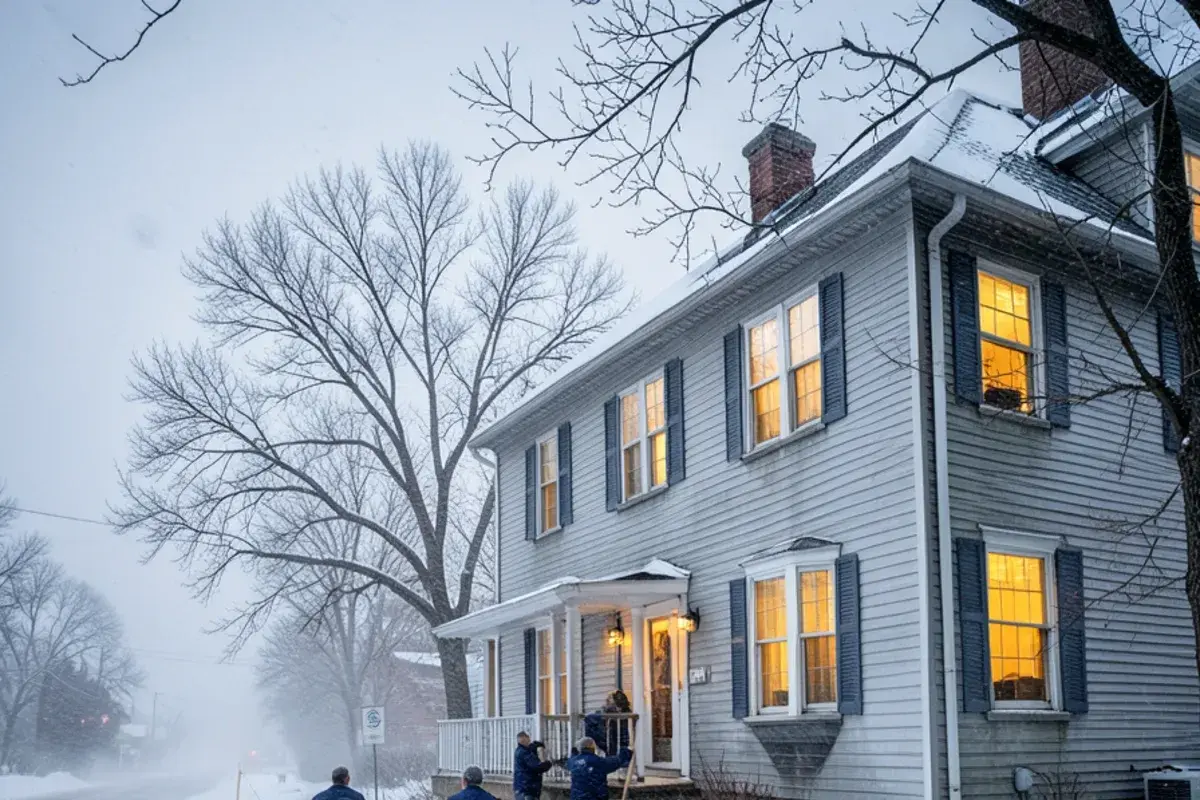
If your furnace quits during a blizzard, check three things in this order: the power, the outdoor vents and the thermostat. Most no-heat calls in a storm come from one of them. After that, you need a plan for staying warm and a clear idea of when help can actually reach you.
Western New York has seen what a bad one looks like. We want you to be ready before the next one.
What did the December 2022 blizzard teach us about heat?
The National Weather Service in Buffalo called it a historic blizzard. Its winter summary describes 37 consecutive hours of blizzard conditions, with winds gusting over 70 mph, starting on the morning of December 23 and lasting into the late evening of December 24. Travel was banned, thousands of vehicles were left on the roads, and numerous power outages hit Western New York.
The National Weather Service defines a blizzard by wind and visibility, not by snow totals. Its glossary calls for sustained winds or frequent gusts of at least 35 mph, with heavy falling or blowing snow that often cuts visibility to under a quarter mile, all expected to last three hours or longer. Blowing snow is the part that matters for your furnace, because that is what packs into vent pipes and builds drifts against the wall.
Three lessons stand out for a homeowner. First, power can fail for days, and a gas furnace will not run without it. Second, wind buries vents and intakes fast. Third, nobody can drive to your house during a travel ban, whoever you call.
Which heating systems keep running without power?
Almost none of them. The fuel may keep flowing, but the controls, blower and pump need electricity.
| System | What fails in an outage | What to expect |
|---|---|---|
| Gas furnace | Control board, ignitor, blower | Off until power returns, then restarts by itself |
| Hot water boiler | Circulator pump, controls | The boiler may stay hot but the radiators go cold |
| Steam boiler | Burner controls, water feeder | Off until power returns, and low water may lock it out |
| Heat pump | Compressor, fans, controls | Off, and backup heat is off too |
Cast iron radiators hold heat for a while, but once a boiler house goes cold it takes a long time to recover. If you want heat through an outage, a generator is the answer, and an electrician should wire it with a proper transfer switch or interlock. Never plug a generator into a wall outlet.
What should you check first when the heat quits?
Work through this list before you call.
- Look at the thermostat. Check that it is set to heat and the batteries are fresh.
- Check for power. If lights are out, the furnace is out too. Wait for power, and keep the thermostat on heat so the furnace restarts by itself.
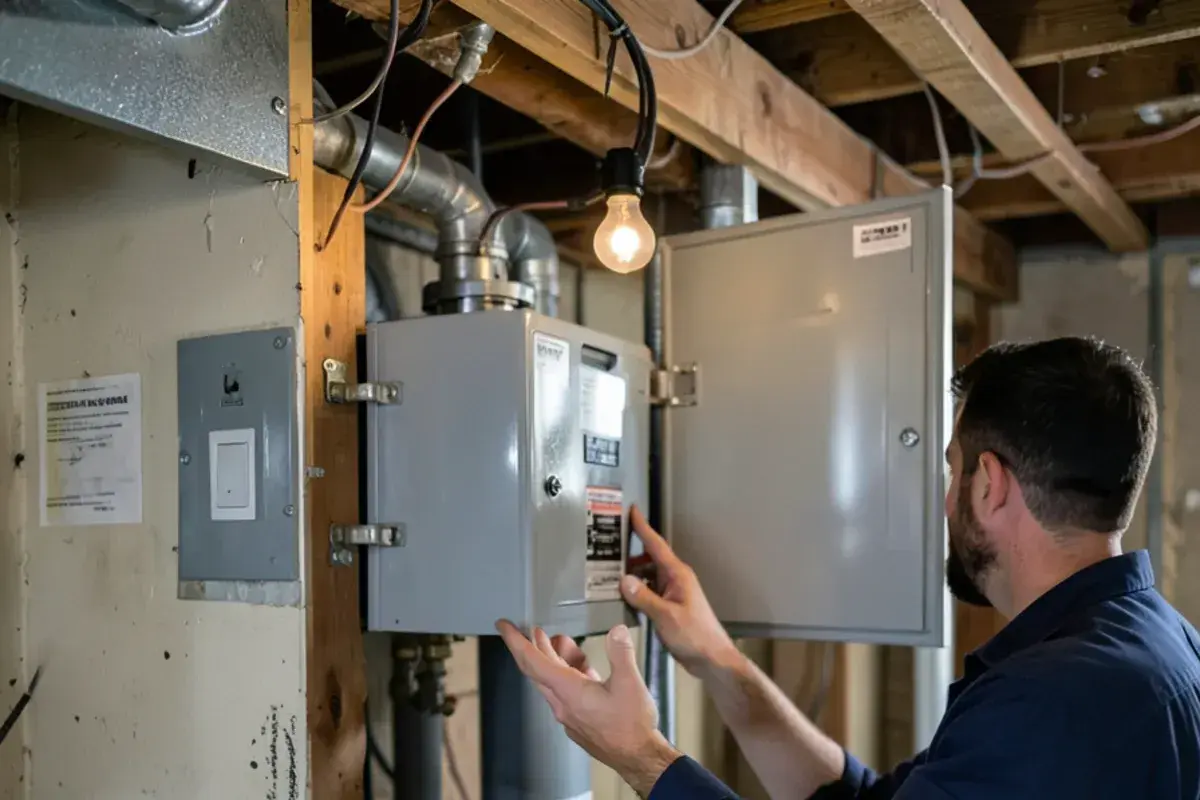
- Find the furnace switch and breaker. A light-switch style switch is often on or near the furnace. Make sure it is on.
- Clear the vents. High-efficiency furnaces use two white plastic pipes on an outside wall. Clear snow from both by hand.
- Reset once. Turn the thermostat down, wait a few minutes, then turn it up again.
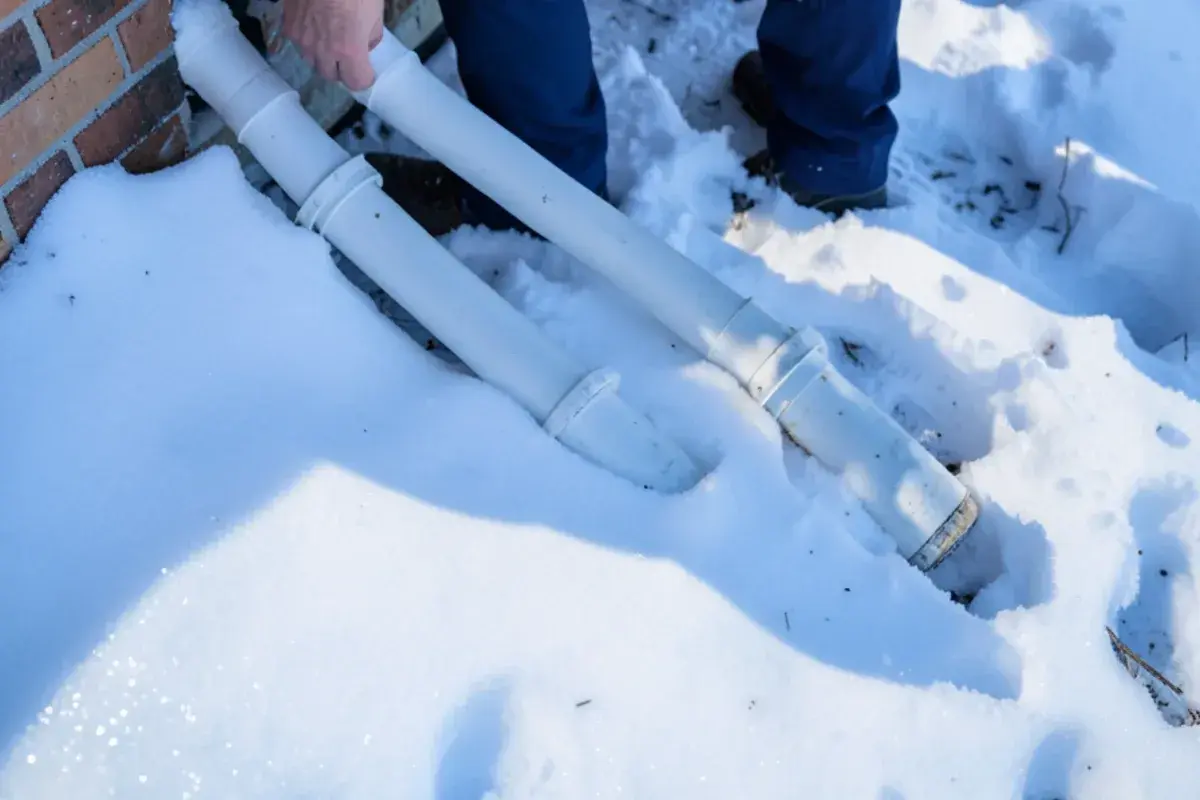
Our guide to furnace vents and lake-effect snow goes through the vent check in detail. If the house is already cold, see no heat at night for the safe steps. And if the gas smells off, read what to do if you smell gas before anything else.
How do you stay warm and safe if the power is out?
Heat the smallest space you can. Pick one room, close the door, hang blankets over windows and doorways, and bring everyone in. Layer clothing and keep moving.
Never heat with an oven, a grill or a camp stove inside the house. National Fuel lists fatigue, headache, dizziness and nausea as carbon monoxide symptoms, and says to go outside immediately and call 911. A generator belongs outdoors, and never in a garage. The U.S. Consumer Product Safety Commission says to keep portable generators at least 20 feet from doors, windows and vents that could let carbon monoxide indoors. Some manuals suggest less, and the Commission's number is the one to follow.
Keep carbon monoxide alarms working on every level, and replace the batteries before the season starts. If you smell gas at any time, leave immediately without touching switches, and call National Fuel's emergency line at 1-800-444-3130 from somewhere else, or 911. National Fuel says the line is staffed 24 hours a day, seven days a week.
What if the house stays cold for hours?
Frozen pipes become the next worry once the house drops toward freezing. Open the cabinet doors under sinks on exterior walls so room air reaches the pipes. Let a faucet drip slowly on the coldest wall. Know where your main water shutoff is, so you can close it fast if a pipe splits.
Pipes in a crawl space, a garage wall or an unheated porch freeze first. A basement furnace that has been off for a day leaves the whole house colder than you expect, and recovery after power returns takes time. Keep the thermostat on heat and give the system a few hours before you assume something is broken.
What should you do when the power comes back?
Do not assume the furnace will behave right away. Go through this order.
- Leave the thermostat on heat. Set it only a few degrees above the room temperature at first.
- Give the furnace a few minutes. Most restart on their own after a short self-check.
- Look at the vent pipes again. Wind during the outage may have refilled them.
- Check the condensate line. A high-efficiency furnace that sat in a cold basement may have a frozen drain.
- Reset the furnace switch once. If it still fails, stop and call.
- Watch the pipes. Leave the faucets dripping until the house has fully warmed, then check for leaks under sinks.
Do not keep resetting a furnace that shuts itself off again. A safety switch is telling you something, and repeated restarts hide the cause.
How do you prepare the furnace before the storm?
A little work in the fall prevents most storm failures.
| When | What to do | Why |
|---|---|---|
| October | Book a furnace tune-up | Catches a weak ignitor or dirty flame sensor before a cold snap |
| Before each storm | Change the filter and clear the area around the furnace | A clogged filter can overheat the unit |
| Before each storm | Mark the vent pipes with a tall stake | Easier to find under a drift |
| After each storm | Shovel a path to the vents | Keeps intake and exhaust open |
Keep a few supplies together: flashlights, spare batteries, blankets, water, and any medicine you need. Know where your furnace switch and breaker are, and take a photo of the vent pipes on a clear day.
Can we get to you in a blizzard?
Our office hours are Monday through Friday, 7:30 AM to 5:00 PM, and we are closed Saturday and Sunday. Call anyway and leave a message if it is outside those hours. Customers have reached us on weekends. One reviewer said they called on a Sunday morning and got a return call:
“Actually called on a Sunday morning and promptly received a return call from John.”
That review is from 2019 and is one customer's experience, not a promise. In a blizzard with a travel ban, we may not be able to get there in time, and we will say so honestly. If the problem is a risk to life, such as carbon monoxide or a gas smell, call 911 or National Fuel instead of waiting for us.
When should you call us?
Call when the vents are clear, power is on, and the furnace still will not start or keeps shutting off. Our emergency furnace repair page explains how we handle urgent calls, and furnace repair covers the usual faults we find. In Tonawanda and the rest of the Buffalo area, call (321) 666-8870.
Quick answers
How far from the house should a generator run?
At least 20 feet from doors, windows and vents, according to the U.S. Consumer Product Safety Commission. Never run one in a garage, on a porch or in a carport, even with a door open. A generator wired into your panel needs a transfer switch or interlock installed by an electrician. Keep working carbon monoxide alarms on every level of the house.
Why did my gas furnace stop when the power went out?
A gas furnace needs electricity for the control board, ignitor and blower, so an outage stops it even though gas is still flowing. The furnace should restart on its own when power returns. If it does not, check the switch near the unit, the breaker and the vents before you call. Do not try to light it by hand.
Is it safe to heat the house with the oven or a grill?
No. Gas ovens, grills and camp stoves make carbon monoxide, and using them for heat is a common cause of poisonings in outages. A generator must run outdoors, well away from windows and doors. If anyone gets a headache, dizziness or nausea, go outside and call 911. Use blankets, close off rooms and shelter in one warm room.
Sources
- National Weather Service glossary, definition of blizzard
- U.S. Consumer Product Safety Commission, Portable Generator Safety Alert (20 feet from doors, windows and vents)
- National Weather Service Buffalo, Winter 2022-23 summary (December 23-27, 2022 blizzard)
- National Fuel, Fall 2025 customer newsletter, gas and carbon monoxide safety