
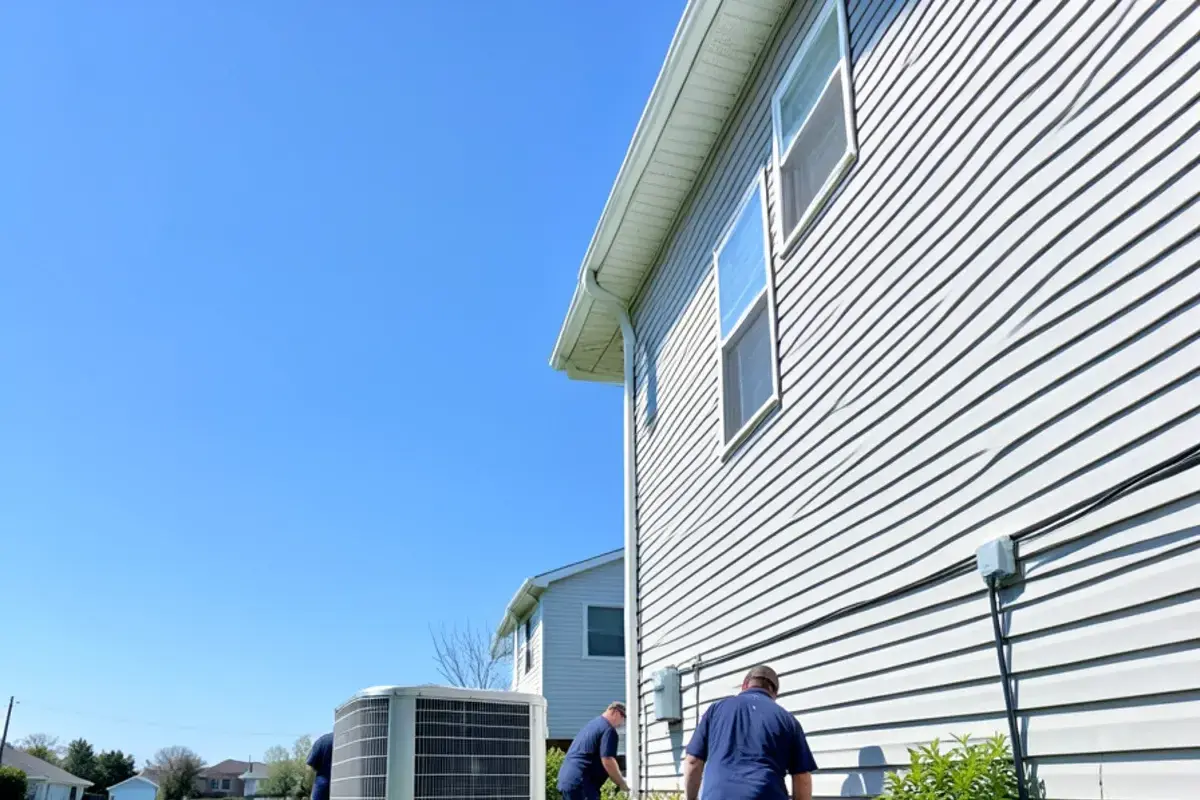
AC Installation in Buffalo, NY
A new central air system chosen from your house’s real heat load, set up cleanly and explained before we leave.
- 4.9★ on Google (57 reviews)
- Locally owned since 2011
- 15 years in Western New York
- No high-pressure sales
AC installation in Buffalo starts with a load calculation, not a guess at tonnage. We measure the house, size the equipment to the heat it actually gains, and install it so the cool air reaches the rooms that need it.
Summers here are short and humid, with only about 2.1 days a year above 90°F according to the Great Lakes Integrated Sciences and Assessments center at the University of Michigan. That makes an oversized unit the easy mistake. It cools the air quickly, shuts off, and leaves the house clammy.
What is included with AC Installation
- A room-by-room heat load estimate using ACCA Manual J methods
- Equipment matched to that load, the way the New York energy code describes under ACCA Manual S
- A look at the existing ducts, returns and air handler location before we quote
- Outdoor pad, line set, disconnect and condensate drain installed and tested
- Refrigerant charge set and airflow checked before we leave
- A walkthrough of the thermostat and filter, with a clear quote before work starts
How do we size a new air conditioner for a Buffalo house?
We size from a heat load calculation, not from square footage. The load depends on attic insulation, window area, how tight the house is and how many people live in it. Two houses of the same size can need very different equipment.
The New York energy code calls for equipment to be selected under ACCA Manual S, based on loads figured with ACCA Manual J or another approved method. That is the standard we work toward. A unit that is too large drops the temperature fast, cycles off early and leaves moisture in the air, which matters in a Buffalo July.
- The envelope: attic insulation, window area and direction, and basement or crawlspace conditions.
- The air path: supply and return ducts, their size, their leaks and where they run.
- The location: where the air handler fits, and where the outdoor unit can sit above snow and away from bedroom windows.
- The household: how many people live there, and which rooms run hot.
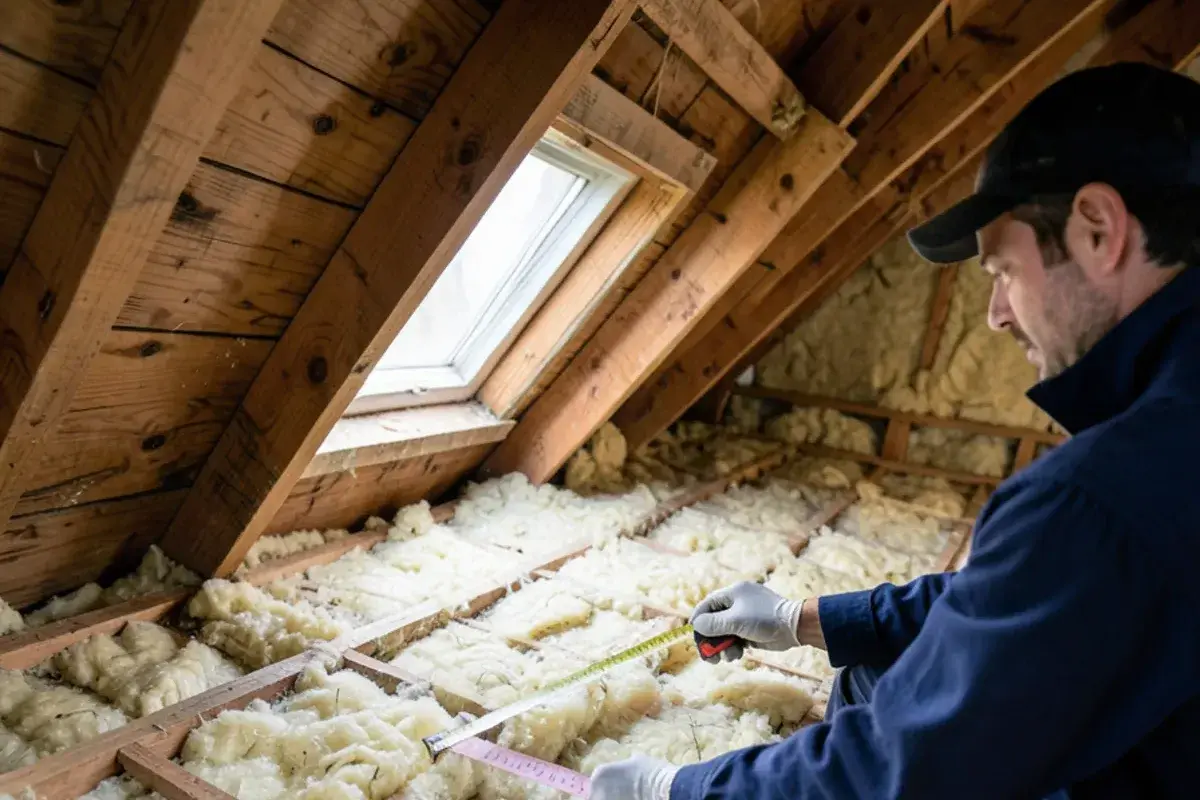
Can an older Buffalo house get central air without tearing it apart?
Usually yes, and the answer depends on what the house already has. About 61 percent of housing units in the City of Buffalo were built in 1939 or earlier, per Census data reported by Point2Homes, and those houses often have radiators and no ducts at all.
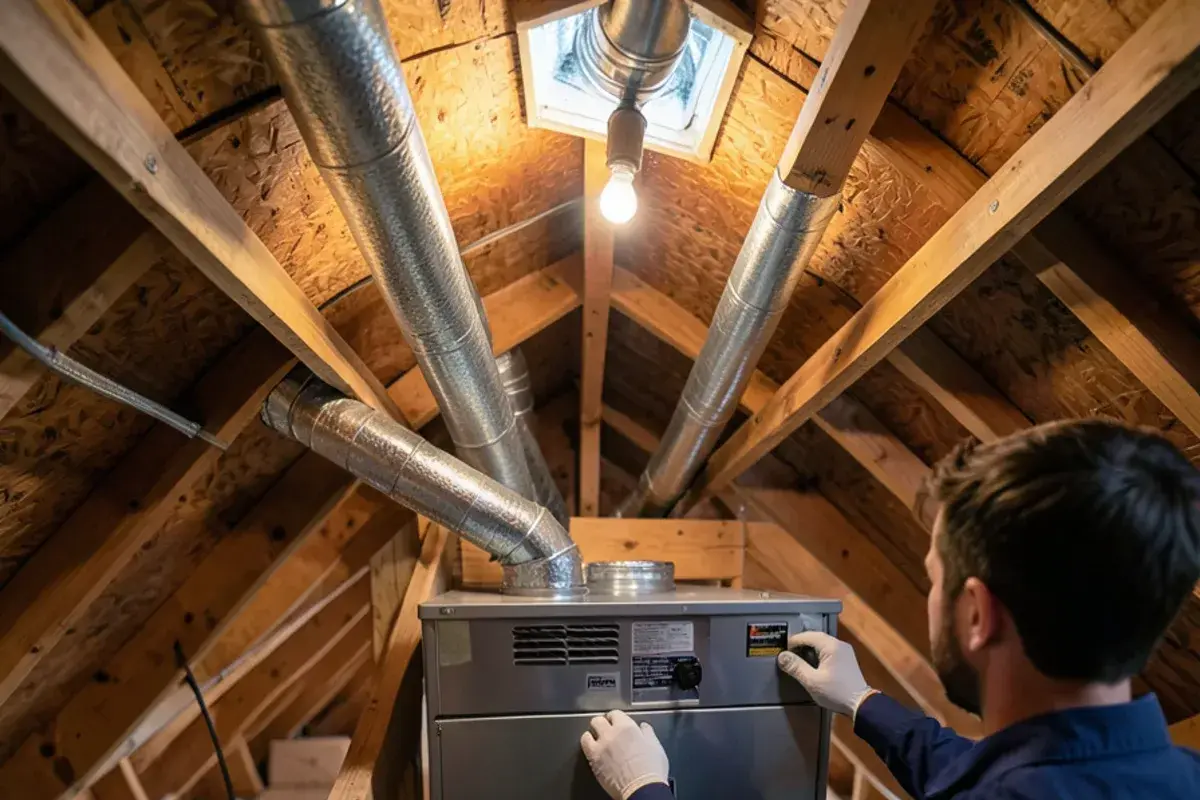
A house with a forced-air furnace can usually take a standard split system on the ducts it has, once we confirm they are large enough to carry cooling air. A house without ducts has three realistic paths: a small-duct air handler in the attic feeding the bedrooms, a ductless system, or a mix of the two. A double often does better with separate equipment on each floor, so each household controls its own temperature. Our ductless mini split page covers that route.
“They installed all of the new equipment in roughly two full days, and I have a comfortable home in the summer time for the first time ever.”
Signs a house is ready for central air
- Window units in the bedrooms every summer.
- An upstairs that runs well above the first floor on humid nights.
- Damp, clammy air that the window units never clear.
- A furnace replacement on the calendar, since the coil and blower are best chosen together.
What happens during an AC installation, and how long does it take?
- Walk the house. We measure, look at the ducts and the attic or basement space, and ask which rooms bother you most.
- Quote and choose. You get a clear quote before work starts, with the equipment options and what separates them.
- Set the outdoor unit. A level pad, a spot above the snow line, and enough room around the coil for air to move.
- Install the indoor side. Coil, drain with a safety switch, duct connections and electrical disconnect.
- Evacuate and charge. We pull the lines down, set the refrigerant charge and check temperatures and airflow.
- Walk you through it. Thermostat settings, the filter location and what to watch during the first week.
Timing depends on the equipment and the house. Reviewers describe installs finishing within a week of the quote, and one two-day job covered a furnace, central air and a hot water tank together. A swap onto sound ducts moves faster than an add-on system, where routing takes the time.
“John came out gave a quote quickly and completed a new installation of air conditioning wiithin a week.”
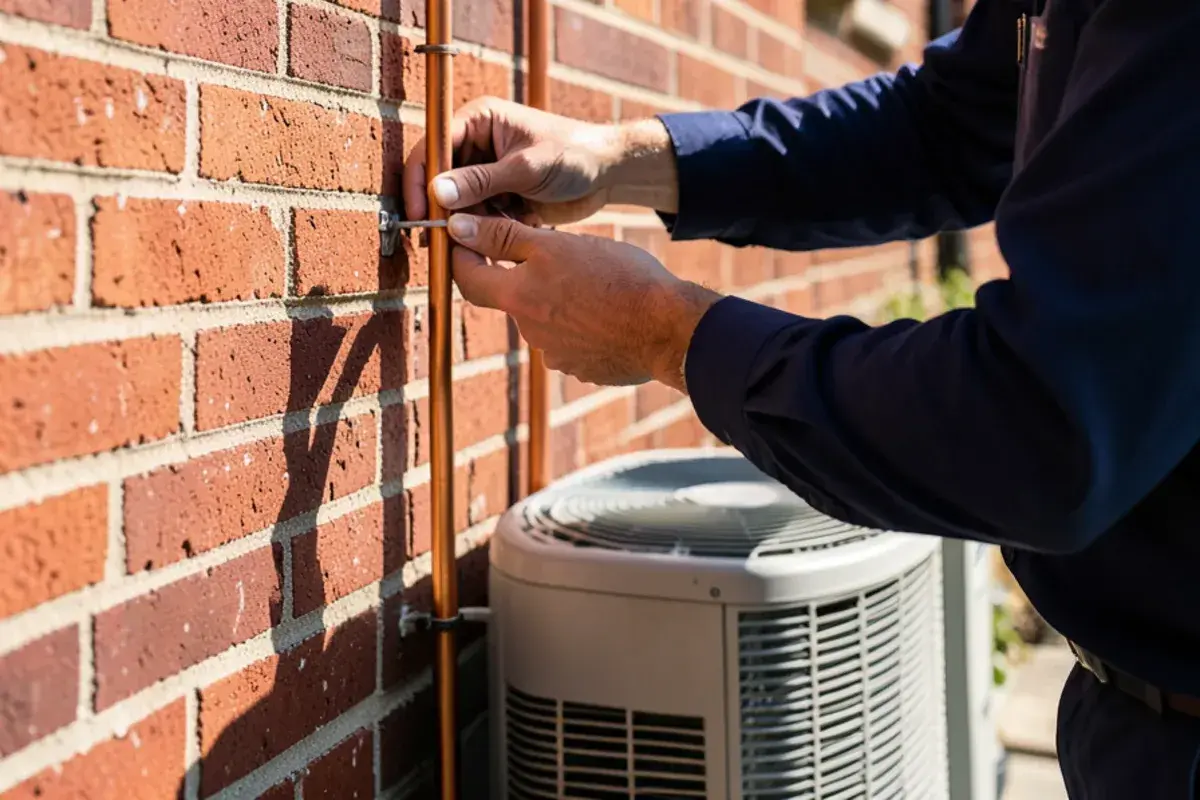
What affects the cost of a new air conditioner?
Vantage publishes no price list, because two houses rarely need the same job. You get the full number before work starts.
| Factor | Why it moves the price |
|---|---|
| Existing ducts | Sound ducts keep the job simple. Undersized or leaky ones may need repair or new runs. |
| Air handler location | A basement is easy to reach. An attic means hauling equipment up and routing lines through finished space. |
| Equipment type | Single-stage, two-stage and variable-speed systems cost different amounts to buy and to run. |
| Line set length | A long run between the outdoor unit and the coil takes more material and more time. |
| Electrical work and permits | A new disconnect or breaker adds labor, and some towns require a permit. |
For an outside reference only, This Old House’s central air conditioner cost guide (updated October 2, 2026) shows $6,345 to $10,575, averaging $8,460, for a new unit with installation. Take it as a national guide rather than our price. The guide names size, efficiency rating, labor, features and existing ductwork as the main drivers, and a house with weak ducts can push a job past it.
“John and his team were wonderful. They provided us the best quote we received out of 6 different contractors and still offered an excellent product.”

Single-stage, two-stage or variable speed: which suits a short humid summer?
A single-stage unit runs at full output whenever it runs. A two-stage unit spends most of its time on a lower setting, and a variable-speed unit adjusts continuously. The slower settings run longer, which pulls out more moisture and keeps the temperature steadier.
Buffalo cools for only a few months, so a premium unit takes longer to repay its price in energy savings than it would in a hotter city. That is our view, not a rule. If one bedroom runs sticky or someone in the house is sensitive to noise, the extra stages earn their cost sooner. Ask for the SEER2 rating on every option so you can compare them side by side.
“John and the crew were awesome, good guys. I couldn’t be happier with my completely new HVAC system.”
Which permits and code rules apply to a new AC, and what care follows?
New York has no statewide HVAC contractor license, and Erie County Consumer Protection says licensing is set town by town. Its list shows Cheektowaga licensing HVAC contractors, Amherst licensing home improvement contractors, and the Town and City of Tonawanda and the Village of Kenmore requiring contractor licensing. Confirm yours with the municipality, and ask any contractor, including us, who pulls the permit.
The Department of Energy requires split-system air conditioners made on or after January 1, 2023 to meet 13.4 SEER2, and sets higher regional minimums only for the Southeast and Southwest. Refrigerant work is limited to technicians certified under EPA Section 608. Your quote should name the model and its SEER2 rating.
Care after the install
- Change the filter on a schedule you can keep, and more often in pollen season.
- Keep shrubs and snow piles back from the outdoor unit so air can pass through the coil.
- Book a first AC maintenance visit the following spring so the drain and the charge are checked once.
Why Vantage for AC Installation
You talk to John
Vantage has been locally owned and operated since 2011, and reviewers name John from the first call to the last check-in.
Quotes arrive quickly
One customer said John gave a quote quickly and finished the installation within a week.
A 4.9 on Google
That rating comes from 57 Google reviews counted in October 2026, and you can read them here.
Clean, explained work
Reviews mention tidy crews and plain explanations at each stage of the job.
Built around your calendar
A customer who replaced both furnace and AC with us said we worked with their schedule and their budget.
Warranty. New equipment carries a manufacturer warranty that varies by model, with different terms for parts and for labor. We go over what your system includes before you approve the job. One reviewer said John helped register products for warranty, so ask us about registration for yours.
Where we work. We install from our Orchard Park base across the Southtowns and Buffalo suburbs. Mid-century homes in Depew often need add-on central air, newer larger homes in Orchard Park call for careful multi-zone sizing, and snow load on outdoor units is a real factor in Hamburg. Browse all service areas.
What customers said
“So happy I found this guy. Johnny did my AC install and setup and routine service for my furnace.”
“John and his crew were very nice, knowledgeable, and professional. They did a great job on my new furnace, AC unit, and air purifier.”
AC Installation questions
How long does an AC installation take?
A swap onto sound existing ducts is often a day or two of work, and add-on central air takes longer because of the routing. The calendar matters as much as the labor, since equipment has to be on hand. We tell you what to expect when we quote, and we say so if the schedule shifts.
What size air conditioner does my house need?
The right size comes from a heat load calculation, not from square footage. Insulation, windows, ducts and the shape of the house all change the number. We measure first, then match the equipment to the load, because a unit that is too big cools quickly, shuts off early and leaves the air damp.
Can I add central air to a house with radiators?
In most cases, yes. A house without ducts can take a small-duct air handler in the attic, a ductless system, or both. The choice depends on attic height, closet space and which rooms you want cooled. Your radiators stay as they are, because heating and cooling run as separate systems. We look at the house before suggesting a route.
Do I need a permit to install a new air conditioner?
Permit rules are local, so check with your municipality before work begins. Buffalo routes HVAC work through Permit & Inspection Services, and starting ahead of the permit can bring double fees under Buffalo Code Chapter 175. Give us your address and we will tell you what to expect.
Should the furnace be replaced when the AC is installed?
Not always. The indoor coil sits on the furnace or air handler, and the two have to agree on airflow. If the furnace is near the end of its life, doing both together saves a second visit and a second set of electrical connections. If it is sound, we install around it, and we tell you which case yours is.
Is a bigger air conditioner better in humid weather?
No. An oversized unit satisfies the thermostat before it has pulled much moisture from the air, so the house feels cool and clammy. A correctly sized unit runs longer cycles and dries the air better. Choosing equipment by rule of thumb is a common mistake in older houses, and a load calculation avoids it.
What efficiency rating does a new central air conditioner need?
The Department of Energy requires split-system air conditioners made on or after January 1, 2023 to rate at least 13.4 SEER2, and it sets higher regional minimums only for the Southeast and Southwest. A higher rating costs more up front and repays slowly in a short cooling season. Ask for the SEER2 figure on every option we quote.
Where we handle AC Installation
- Orchard ParkNewer larger homes where two floors need a careful load calculation and sometimes separate zones.
- BlasdellNarrow village lots limit where a condenser can sit without crowding a neighbor’s window.
- HamburgABC7 listed 77.3 inches in November 2022, so the condenser pad has to clear deep snow.
- DepewMid-century houses built for heat only often need their ducts checked before central air goes in.
- West SenecaDamp basements near the creeks call for a raised air handler and a working drain.
- AmherstLarge two-story homes where one thermostat cannot hold both floors, so zoning comes up.
- ClarenceTall rooms, big glass and additions often make two smaller systems better than one large unit.
- WilliamsvilleLandmark houses may face exterior rules on outdoor units and line sets, so placement comes first.
- LancasterHouses from the growth years need a fresh load calculation because finished basements changed the load.
- TonawandaDucts in 1950s tract homes were sized for heat, so airflow gets measured before sizing.
More on AC Installation
Related services
From the blog
Nearby service areas
Talk to the people who do the work
Talk with Vantage about AC Installation.
- 4.9★ on Google (57 reviews)
- Locally owned since 2011
- 15 years in Western New York
- No high-pressure sales
Vantage Heating and Cooling · Orchard Park, NY · (321) 666-8870 · Mon–Fri 7:30 AM–5:00 PM · Sat–Sun closed