
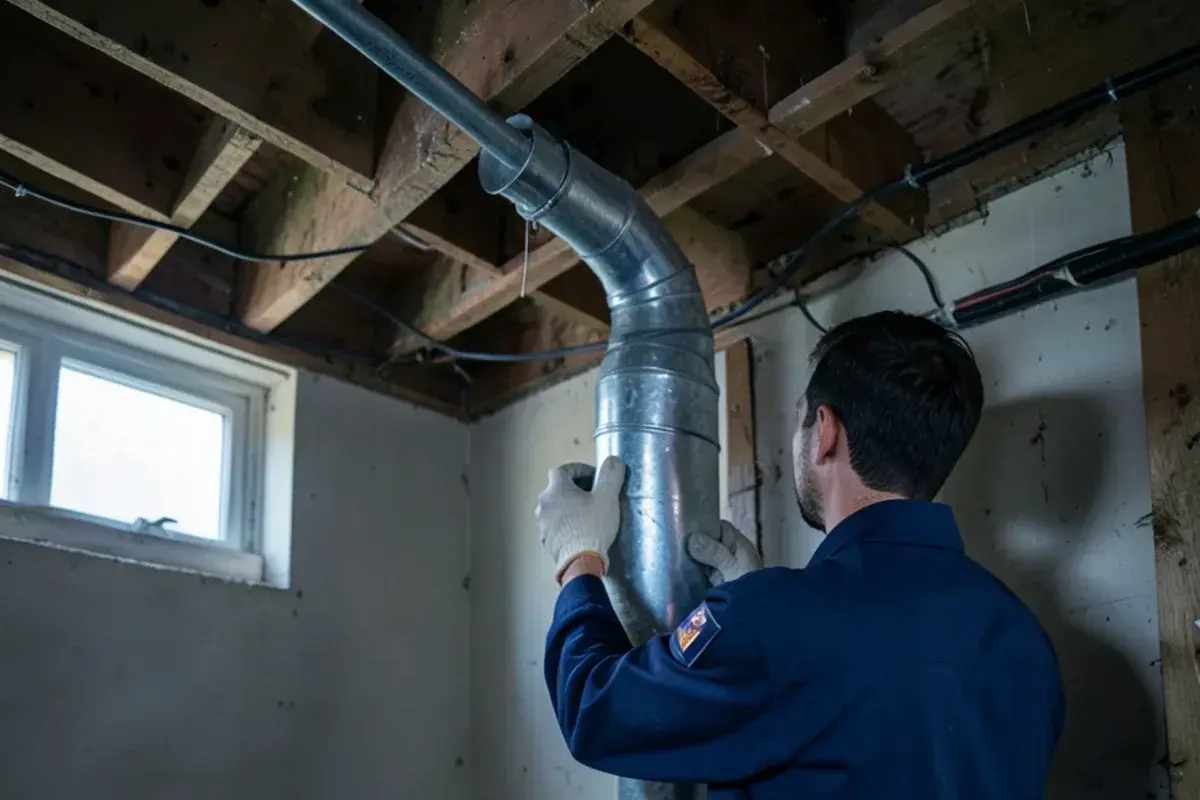
Duct Repair and Replacement in Buffalo, NY
We find where your ducts lose air, fix that, and replace only what cannot be saved.
- 4.9★ on Google (57 reviews)
- Locally owned since 2011
- 15 years in Western New York
- No high-pressure sales
Duct repair and replacement in Buffalo usually starts with a house where one or two rooms never get comfortable, even though the furnace and AC are working. The cause is often a leaking joint, a crushed run, an undersized return or a duct sitting in a cold space with no insulation. We find which one, show you, and quote the fix.
ENERGY STAR says that in a typical house, about 20 to 30 percent of the air moving through the duct system is lost to leaks, holes and poorly connected ducts. That is conditioned air going into a basement or attic instead of the room you pay to heat.
What is included with duct repair and replacement
- A walkthrough of every room you call too hot, too cold or noisy
- A look at the visible trunk lines, branch runs, boots and plenums
- Checks at the filter, the return and the blower for restriction
- A look for insulation gaps, moisture, rust and pest damage on runs through unconditioned space
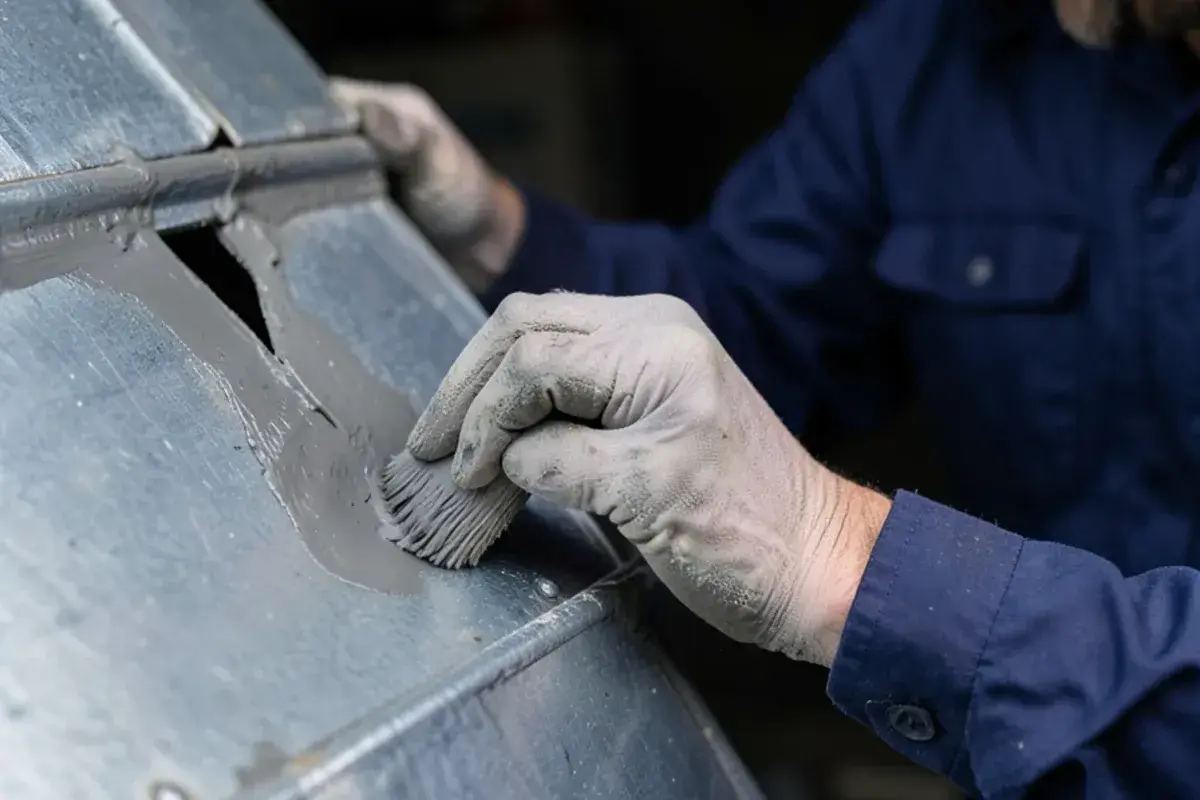
- Sealing of joints and seams where that will solve the problem
- Reconnecting, supporting or replacing sections that have failed
- A clear quote before any work starts, with repair and replace options side by side
What are the signs of leaky or failing ducts?
- Rooms that lag: a back bedroom or an upstairs room that is always off from the thermostat.
- Whistling or rattling: a sign of high air velocity through a restriction, or loose sections.
- Dust and basement odor in the supply air: return-side leaks pull air from places you do not want.
- Sweating or wet insulation: moisture on a duct in a cold space.
- Bills that climb without a reason: the equipment runs longer to make up for the loss.
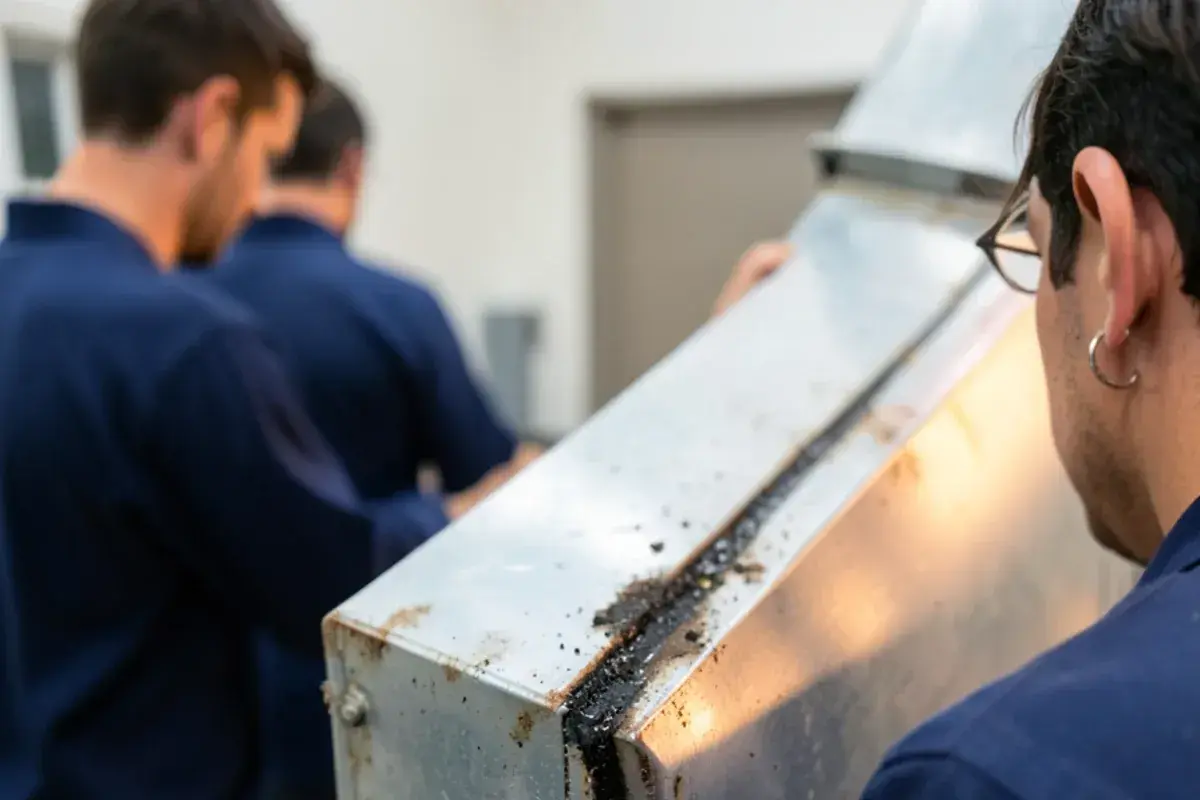
- Dust streaks at seams: air leaking from a joint often leaves a dirty outline.
“John Gach and the whole team did an amazing job. They were timely, polite and very professional.”
What goes wrong with ducts in older Buffalo homes?
Census data show about 61 percent of City of Buffalo housing units were built in 1939 or earlier. Many of those houses were built for radiators and gravity heat and had no ducts at all. When furnaces and central air arrived, ducts were fitted into whatever space was left, so runs are long, bends are tight and returns are often too small.
Damp basements add rust at the bottom of trunk lines. Uninsulated runs through an unheated attic or an exterior wall lose heat to the cold in January and sweat in August. Rodents chew insulation and flex duct. Years of renovation work can leave a branch run crushed or disconnected behind a wall, where nobody would find it until a room stops heating.
How we find where the air is going
- Start with the complaint. Which rooms, which seasons, and what changed. A room that went bad after a remodel points somewhere specific.
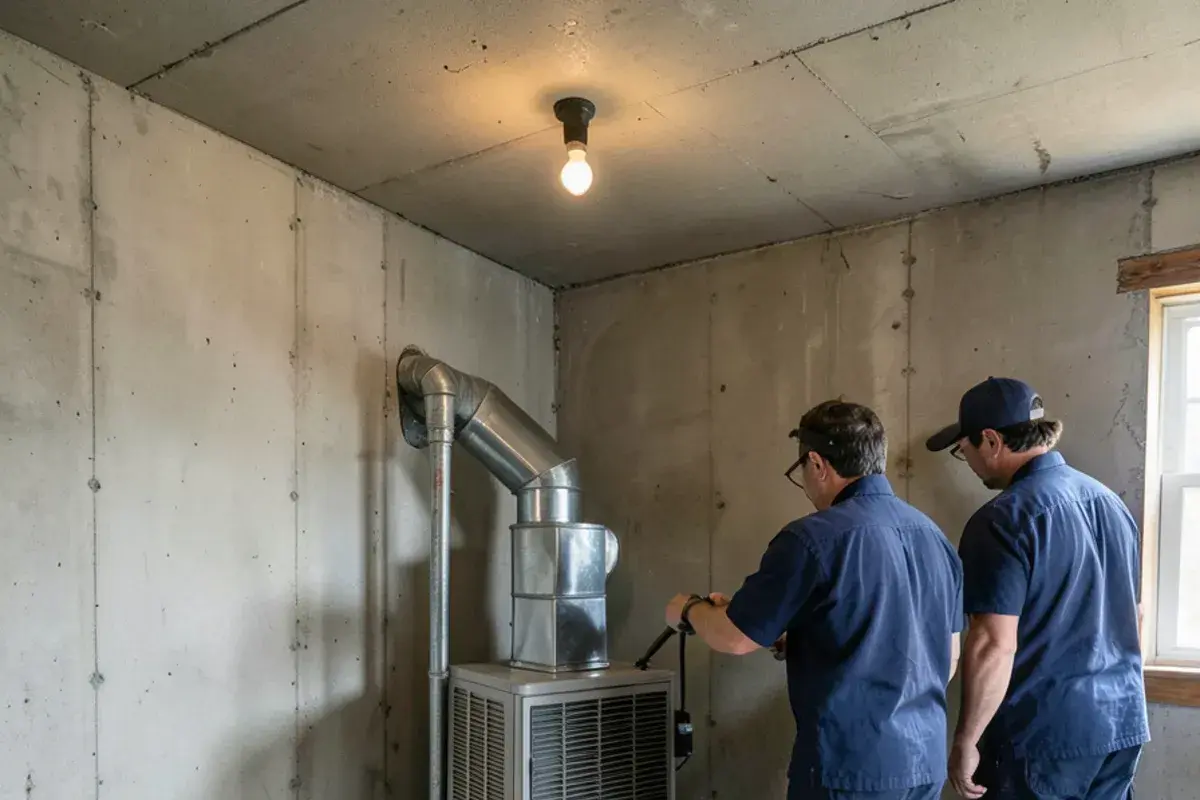
- Follow the accessible runs. We trace trunks and branches in the basement or attic, checking joints, boots, hangers and insulation by eye and by hand.
- Check the equipment side. A dirty filter, a clogged coil or a tight return can mimic a duct problem, so we rule those out.
- Measure where it makes sense. Airflow at registers and pressure across the blower show whether a restriction is real.
- Show you and quote it. You see the problem spot, hear the options, and choose. Nothing is cut or replaced without your approval.
Seal, repair or replace: which option fits?
| Condition | Usual fix | Trade-off |
|---|---|---|
| Leaky joints and seams | Seal with mastic or metal-backed tape | Low cost, but only works where the metal is sound and reachable |
| Disconnected or sagging run | Reconnect, strap and support | Quick, though a hidden run may need access cut into a wall or ceiling |
| Uninsulated run in a cold space | Insulate and seal the run | Cuts sweating and heat loss, and uses little room |
| Undersized or leaking return | Enlarge or add a return path | Often fixes noise and weak airflow, and may take wall or floor work |
| Rusted, crushed or rodent-damaged section | Replace the section | Cost depends on access and length |
| Failed or mismatched system throughout | Design and install new ductwork | Highest cost, and the right call when sections cannot be saved |
Ductwork installation is one of the services on our Google profile. For a new or rebuilt system, the industry method for duct sizing is ACCA Manual D, which pairs with the Manual J load calculation. We size runs from the room loads, not by habit. If the furnace or AC is also at the end of its life, read our pages on furnace replacement and AC replacement.
What do the energy code and local rules say about ductwork?
The New York Department of State, in technical bulletin TB-7006, says the 2025 Energy Conservation Construction Code, effective December 31, 2025, requires ducts in new buildings and additions to sit in conditioned space. It says that does not apply to alterations of existing buildings, where ductwork outside conditioned space can follow Section R403.3.3. The bulletin cites minimum insulation of R-8 for ducts 3 inches or larger and R-6 for smaller ducts, and says other code provisions may apply.
Licensing is local here: Erie County Consumer Protection notes that New York issues no statewide HVAC contractor license. The City of Buffalo requires a Heating Contractor license for heating work, and permits go through Permit & Inspection Services. Ask your building department whether your duct job needs a permit.
How long does duct work take and what does it cost?
A repair on accessible runs, such as sealing seams or reconnecting a branch, can often be done in a single visit. Replacing a trunk line or adding a return takes longer and depends on how much of the house has to be opened up. A full replacement is a multi-day project, and we schedule it around you.
We do not publish a price list. Cost moves with how much duct is involved, how easy it is to reach, the materials and insulation, whether walls or ceilings must be opened and whether the equipment is changing too. You get the number before work begins. Ask us for the number on your own house, and we will explain what drives it.
For scale only, Fixr, updated August 29, 2025, puts a typical whole-house duct replacement at $1,856 to $17,149 for an average 2,500 square foot home with about 275 linear feet of duct. That is an aggregator estimate, not our quote, and it covers a full replacement rather than a repair.
- Layout and the number of vents, since linear feet depend more on layout than on square footage.
- Where the ducts run: attics and basements are easiest, while walls, soffits and runs between floors add labor.
- Replacing existing ducts, which Fixr says costs about 25 percent more than retrofitting a home that has none.
- Material, with sheet metal the most durable and flexible duct the least expensive.
- Patching the walls or ceilings that were opened to reach a hidden run.
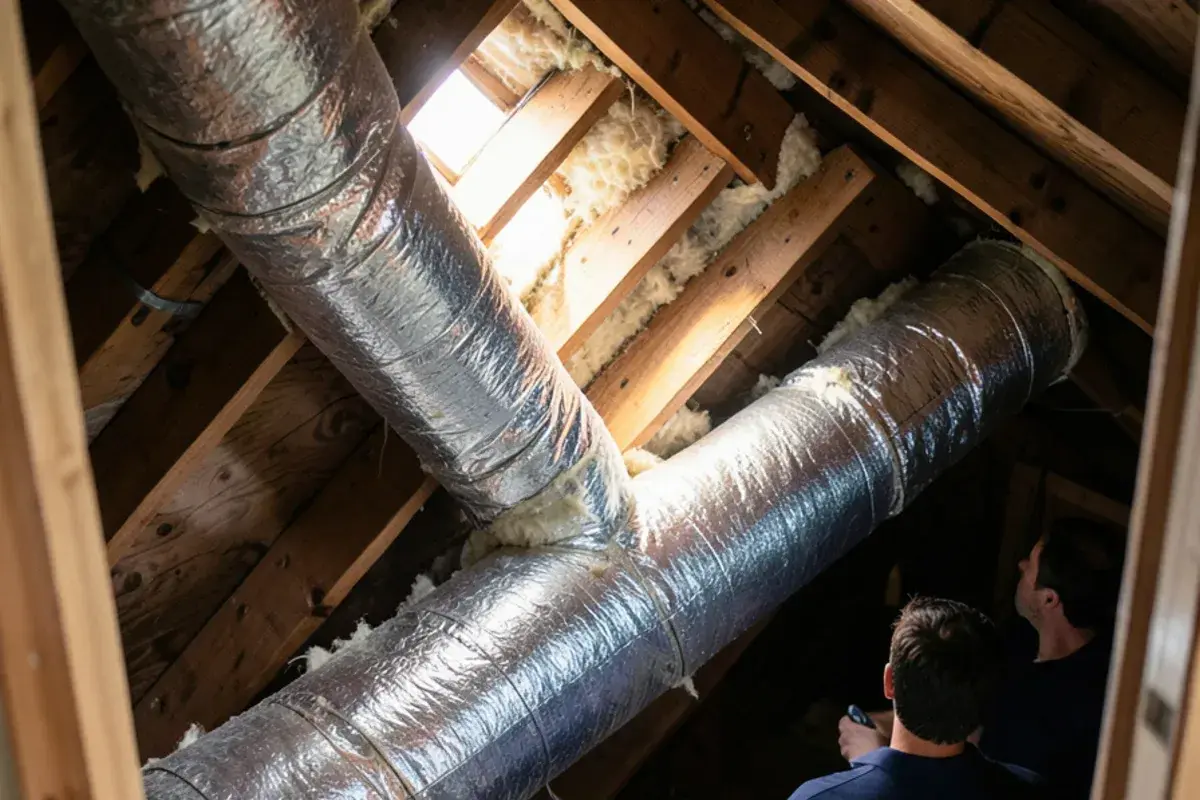
How can I protect my ducts from damage?
- Keep the basement dry with a dehumidifier or by fixing a drainage issue, since rust follows moisture.
- Do not walk on or store boxes against flex duct in the attic.
- Ask any contractor working near the ducts to reseal what they open.
- Replace the filter on time so the blower does not fight a restriction.
- Insulate accessible ducts in attics, unfinished basements and garages, as ENERGY STAR advises.
- Have a sagging or sweating run checked before winter, not in the middle of it.
Why Vantage for duct repair and replacement
You see the problem
Customers keep saying we explain each step and show what is wrong before we fix it. On a duct job that means we point to the seam, the crushed run or the small return, and you decide what to approve.
Repair first, replace if needed
Several reviewers say we fixed things others wanted to replace. We try the smaller fix before the bigger one, and we start with sealing when the metal is sound.
Ductwork is on our profile
Ductwork installation is one of the services listed on our Google profile, and reviews mention duct and vent installation.
Rated 4.9 on Google
As of October 2026, 57 Google reviews average 4.9. Read what customers wrote.
Warranty. Warranty on duct work depends on the materials and manufacturer involved, and workmanship terms are agreed before the job. We go over exactly what is covered before you approve the work, and we answer questions about any coverage already on your system.
Where we work. We are based in Orchard Park and handle ductwork across the Southtowns and greater Buffalo, including Amherst, Lackawanna and West Seneca. Not sure we reach you? Check the areas we serve.
What customers said
“They installed all of the new equipment in roughly two full days, and I have a comfortable home in the summer time for the first time ever.”
“We used Vantage twice this year, to replace our furnace and our AC. They were very responsive and professional, always returned communication, and worked with our schedule and our budget.”
Duct Repair and Replacement questions
How do I know if my ducts are leaking?
Look for rooms that never reach the set temperature, dust streaks at duct seams, whistling, and high bills with no other explanation. Ducts in an unheated basement or attic are the likeliest to leak. We inspect the runs you can reach, check the equipment side, and show you the leak points we find.
Can leaky ducts be sealed without replacing them?
Often yes. Seams and joints in sound metal duct can be sealed with mastic or metal-backed tape. Ordinary cloth duct tape tends to dry out and fail. Rusted, crushed or pest-damaged sections are different, since sealing will not rescue them, and we say so before quoting a replacement for that part only.
Why does one room in my house stay cold?
A cold room usually has a disconnected or kinked branch, a closed or blocked boot, a run through an uninsulated wall, or a return that is too small. In older homes with ducts added later, the run to the far room is often the longest. We trace it from the register back to the trunk.
Should I replace ductwork when I replace my furnace?
Not always. If the existing runs are sound, sealed and sized reasonably for the new equipment, they can stay. If they are leaking, undersized or damaged, a new furnace will not fix the airflow. We look at the ducts during the replacement quote and tell you what we recommend and why.
Do you add ductwork for a new room or addition?
Often that can be done by extending an existing trunk, but only if the system has capacity to serve the extra space. Sometimes a ductless mini split is the better answer for an addition. We check the load and the equipment first, then give you both options with the trade-offs.
Where we handle duct repair and replacement
- Orchard ParkNewer two-story homes where upstairs rooms lag and long duct runs need balancing.
- LackawannaOlder lakeside worker housing, where ducts were fitted into leftover basement space.
- BlasdellClose-set small houses with compact furnace closets leave short, cramped duct runs and tight returns.
- HamburgLakeshore ranches take Lake Erie wind, so ducts in cold attics lose heat quickly.
- DepewMid-century houses that got central air later, with attic and basement runs squeezed in.
- West SenecaMany 1940s and 1950s houses plus damp creek-area basements mean rusted trunk lines.
- East AuroraOlder village houses had heating changed in stages, so mismatched runs are worth tracing.
- AmherstA substantial share of the housing predates 1970, so long runs and later additions are worth checking.
- ClarenceLarge custom homes with dual systems have long runs and vaulted rooms that strain duct sizing.
- WilliamsvillePlaster-walled historic houses make new runs hard, so repair is weighed against a ductless alternative.
More on duct repair and replacement
Related services
From the blog
Nearby service areas
Talk to the people who do the work
Talk with Vantage about duct repair and replacement.
- 4.9★ on Google (57 reviews)
- Locally owned since 2011
- 15 years in Western New York
- No high-pressure sales
Vantage Heating and Cooling · Orchard Park, NY · (321) 666-8870 · Mon–Fri 7:30 AM–5:00 PM · Sat–Sun closed