
Local Angles
Lake-Effect Snow and Your Furnace Vent: What to Check
By John Gach, owner of Vantage Heating and Cooling · Published · Updated
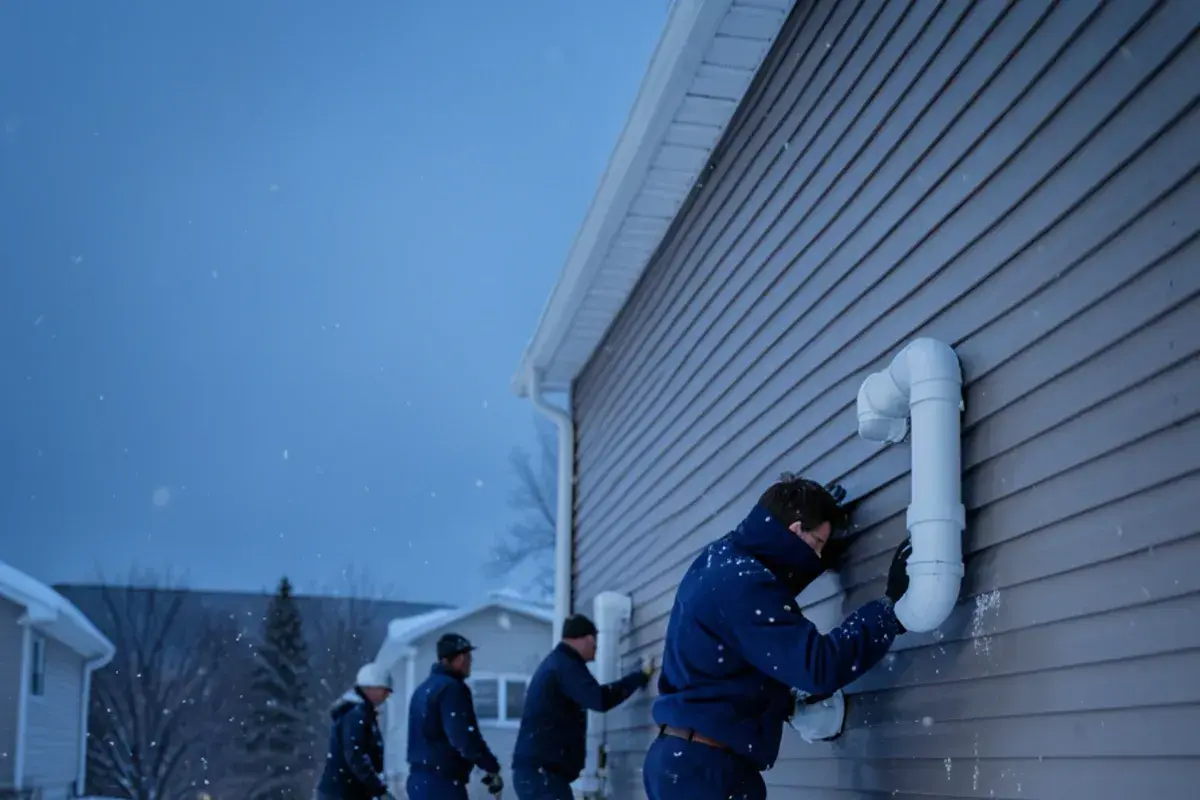
A snowdrift can shut off a high-efficiency furnace by blocking the plastic intake or exhaust pipes on the side of your house. Clear those pipes after every storm and most vent-related no-heat calls never happen. The check takes about two minutes.
Why does snow shut a furnace off?
Standard older furnaces vent up a chimney. High-efficiency furnaces vent sideways through a wall using two white plastic pipes, one pulling in combustion air and one pushing out exhaust. Because those pipes end a foot or two above the ground, a lake-effect band can bury them overnight.
When either pipe is blocked, a pressure switch inside the furnace stops the burner. That is a safety feature doing its job. The result is still a cold house, and it tends to happen on the worst night of the winter.
What should you check after a storm?
Go outside and look at these in order:
- Find the two white pipes. They usually leave the house near the furnace, often on a side wall.
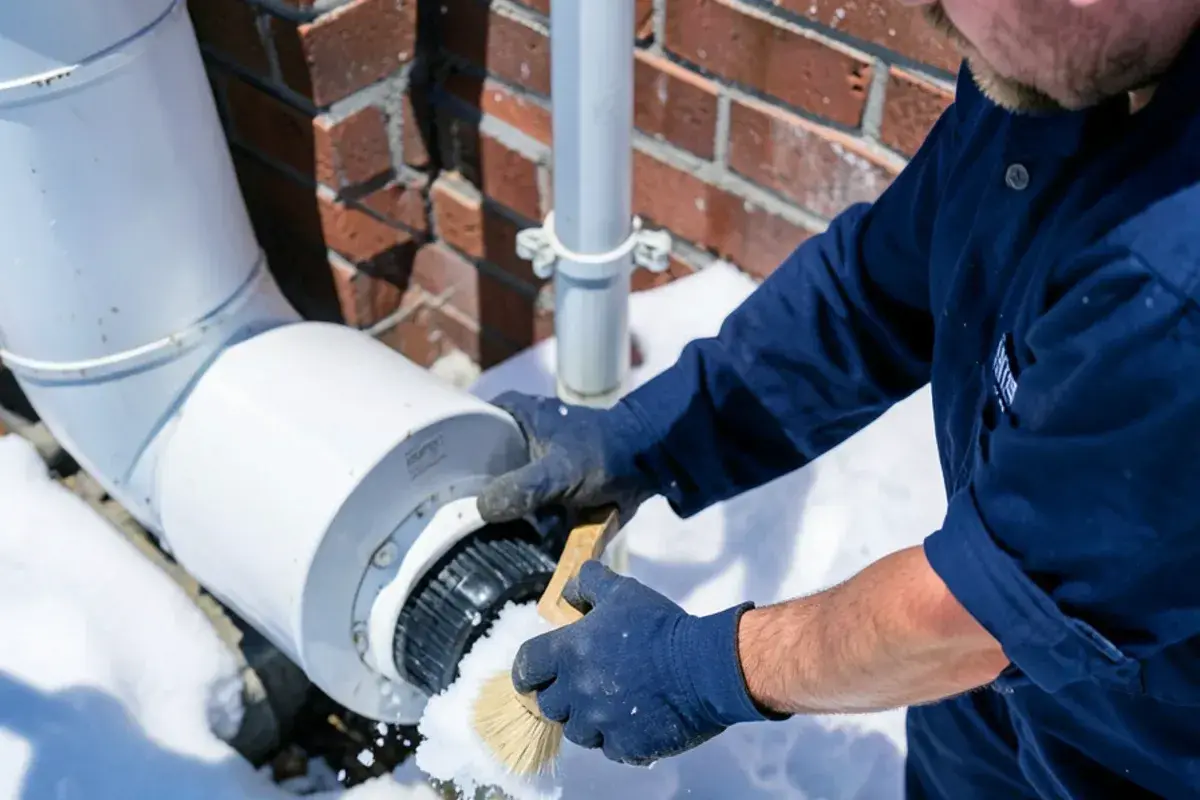
- Clear about a three-foot circle around them, by hand or with a soft brush. A metal shovel can crack plastic.
- Look inside each opening for packed snow or ice, and clear it gently.
- Check the drain line. If the small condensate line runs outside, make sure it is not frozen shut.
- Reset the furnace. Turn the thermostat down, wait a few minutes, then turn it back up.
| What you see | What it likely means | What to do |
|---|---|---|
| Snow packed around the pipes | Vent blockage | Clear it and restart the furnace |
| Ice inside the pipe | Exhaust moisture froze | Clear gently, then call if it returns |
| Pipes clear, furnace still off | A different failure | Call for service |
| Carbon monoxide alarm sounding | Possible danger | Go outside and call 911 |
Where exactly are the vents on your house?
Many homeowners have never looked for them, which is understandable, since the furnace is in the basement and the pipes are outside. Start at the furnace and follow the two white plastic pipes that leave the top of the cabinet. They run along the basement ceiling and pass through the rim joist to the outside.
Outside, you are looking for two pipes about two or three inches across, often side by side, sometimes joined in a single fitting that looks like a stubby T. Older mid-efficiency furnaces use a single metal flue into a chimney liner instead, and a chimney-vented furnace does not have this problem. If you see no plastic pipes, your system likely vents through the roof or the chimney, and snow at ground level will not stop it. Take a photo of the pipes on a clear day so that you know where to dig in a whiteout.
A storm also buries other things worth checking while you are out there. Your gas meter should stay clear, and National Fuel asks customers to keep snow and ice off appliance exhaust and intake vents. A dryer vent or water heater vent on the same wall can drift over the same way.
How much snow does Buffalo actually get?
More than most furnaces are planned around. NWS Buffalo's 1991-2020 normals put the airport station at 95.4 inches of snow a year, with 25.3 inches in a normal December and 26.7 inches in a normal January. Those are averages for one spot. A lake-effect band can stay parked over a narrow strip and leave one town buried while the next sees flurries, so your own storm may be much bigger or smaller than the airport's.
What matters for a vent is not the yearly total but how fast snow piles up against the house. Wind-driven drifts can reach a side-wall pipe in a single night, and a plow pile or a roof shed can bury it faster. Plan on checking after each storm rather than once a week.
Which homes get hit hardest?
Southtowns homes in Orchard Park, Hamburg and East Aurora see the deepest snow. Corner lots and side yards that catch wind off the lake drift the worst, and vents on the west or southwest wall get more of it. Vents placed low during a replacement are another common cause, especially when a furnace moved from a chimney to a side wall.
How we treat a storm-related shutdown
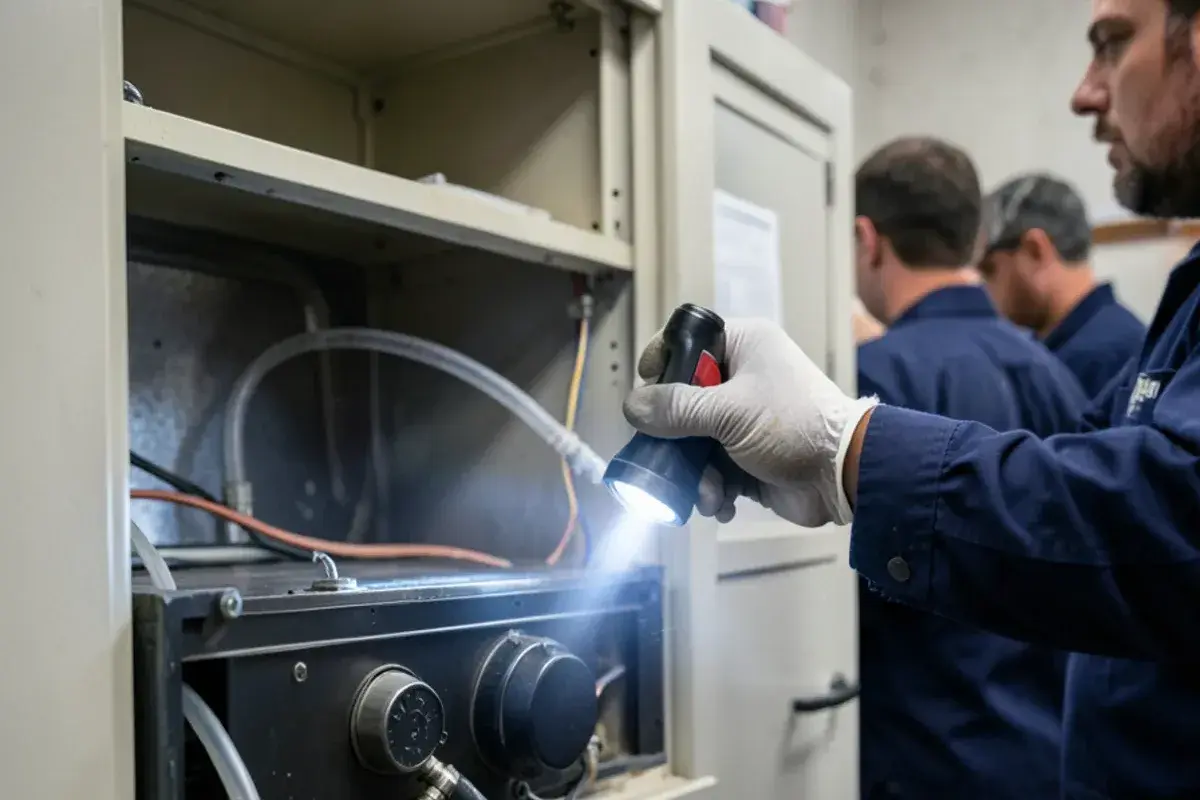
When a furnace has shut off during a storm, we start by asking whether the vents were checked, because it is the cheapest fix there is. If drifts reach a vent every winter, the long-term answer is raising the pipes, not shoveling more often. Where the pipes exit the wall is a design decision, so raise it during furnace installation planning if the old location was low.
We also look at the pressure switch and its tubing during furnace maintenance, since a weak switch can mimic a blocked vent. A customer once told us their furnace was having sporadic trouble firing up, and a thorough cleaning took care of it before the single-digit stretch arrived.
What if the storm also knocks out the power?
A gas furnace is not independent of the grid. The igniter, the inducer fan and the blower all need electricity, so a power outage means no heat even when the vents are clear. In a long outage people reach for generators and space heaters, and that is when carbon monoxide becomes the larger danger.
The CDC says to use generators only outside, more than 20 feet away from any windows, doors and vents, and never inside the house or garage, even with doors and windows open. It also recommends a battery-powered or battery backup carbon monoxide detector in the home while a generator is running. Do not connect a generator to the furnace with an extension cord or improvised wiring. If you want furnace power in an outage, ask an electrician about a proper setup before the storm.
After power returns, walk outside before you assume the furnace will restart. Snow that fell during the outage may have buried the pipes, and a furnace that fires and quits again within seconds is telling you something. Check the two white pipes, then try one restart.
How do you keep vents clear for the whole season?
A little setup in October saves a lot of trouble in January.
- Mark the pipes with a tall garden stake or a reflective driveway marker, so that you can find them under a drift.
- Keep the path to that wall shoveled through the winter, not only the driveway.
- Do not stack firewood, bins or snow from the driveway near the pipes. A plow pile against the house is a common way vents get buried.
- Never put a cover, screen or cap on a vent that the manufacturer did not supply. Those trap frost, and frost blocks the pipe.
- Leave a gap between the vents and any bushes, since branches catch drifting snow.
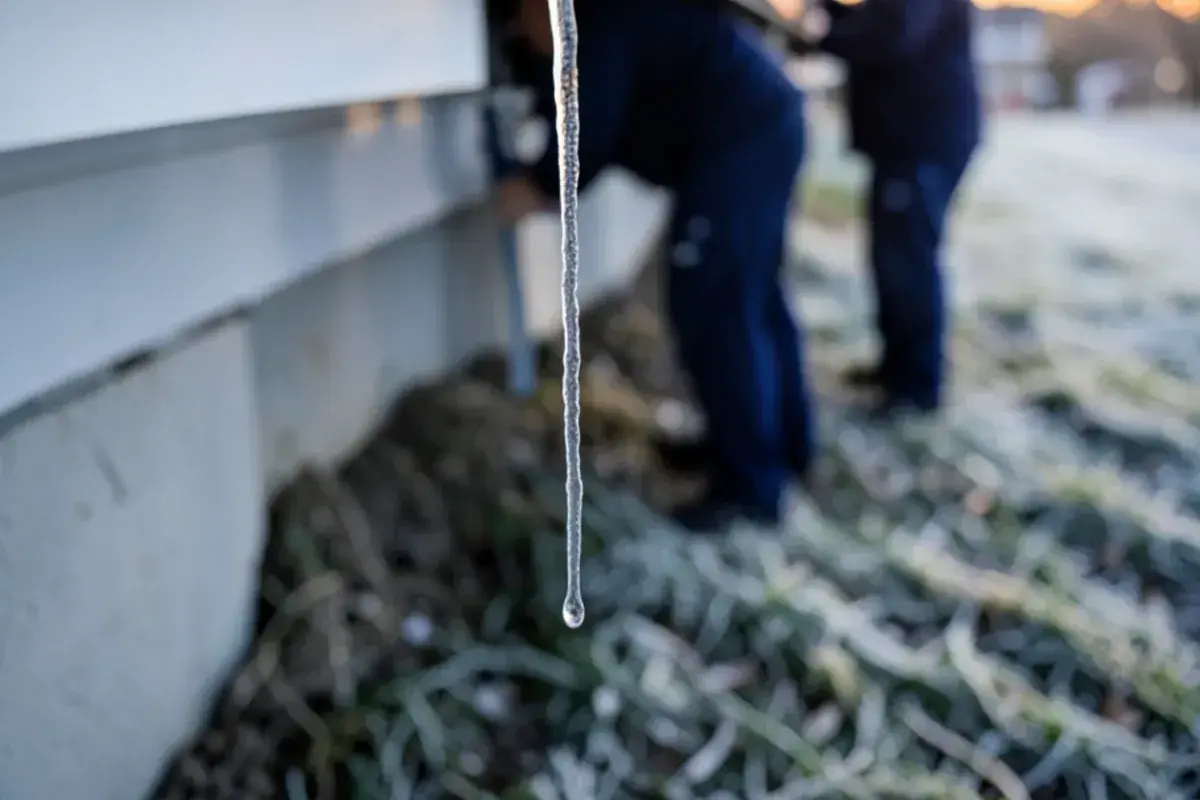
Exhaust from these furnaces is full of water vapor, so a small patch of frost near the pipe on a very cold morning is normal. A solid plug of ice inside the pipe is not. If you keep seeing ice build up, the pipe slope or termination may be the cause, and that is worth having looked at.
When should you call?
Call if the vents are clear and the furnace will not restart, if it restarts and quits again, or if you see ice building inside a pipe. If the house is getting cold, read our guide on what to do with no heat at night, and call us about furnace repair. We are in Orchard Park, right in the snow belt.
Quick answers
Can a blocked vent cause carbon monoxide in the house?
It can, which is why modern furnaces have a pressure switch that shuts them off when the vent is blocked. Do not rely on that alone. Keep working carbon monoxide alarms on every level, and if one sounds, get everyone outside and call 911 before you worry about the furnace.
How far above the snow should my furnace vents be?
Manufacturers usually call for vents to sit at least 12 inches above the expected snow line, and your furnace manual gives the figure for your model. In the Southtowns that can be more than the installer planned for. If drifts reach your vents every winter, ask us about raising them.
Can I run a generator to keep my furnace going in a storm outage?
A gas furnace still needs electricity for its igniter and blowers, so an outage means no heat. If you use a generator, the CDC says to run it only outside, more than 20 feet from any windows, doors and vents, and never in a garage. Use a battery-powered carbon monoxide alarm, and ask an electrician how to connect it safely.
Is frost on my furnace exhaust pipe normal in January?
A light coating of frost near the end of the exhaust pipe on a very cold morning is normal, because the exhaust from a high-efficiency furnace carries a lot of water vapor. A thick plug of ice that narrows the opening is not normal. Clear it gently, restart the furnace, and call us if the ice keeps coming back.