
Problem Solving
Furnace Blowing Cold Air: Causes and Fixes
By John Gach, owner of Vantage Heating and Cooling · Published · Updated
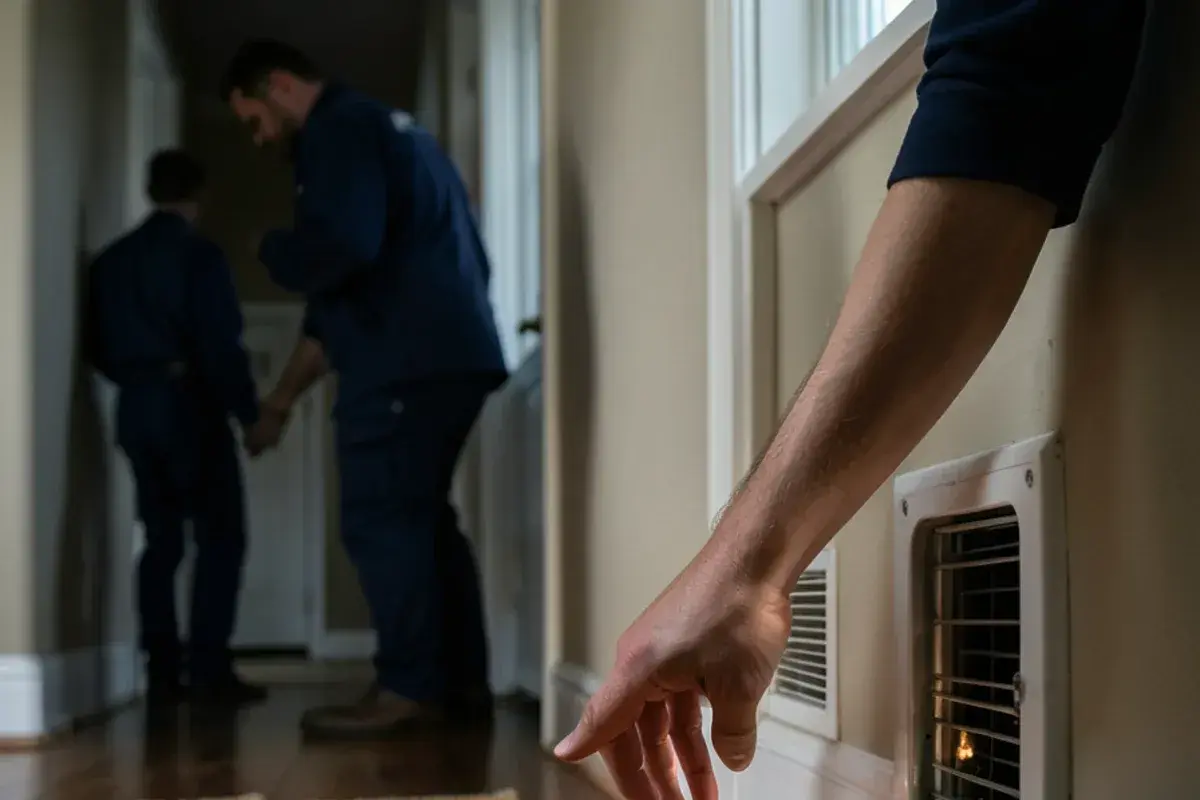
A furnace blowing cold air is usually one of a few simple problems: the fan is set to on, the filter is clogged, the flame sensor is dirty, or the ignitor has failed. Check the first two yourself in about five minutes. If the air stays cold after that, the cause is inside the furnace and needs a technician.
Cold air from the vents does not always mean the furnace is dead. It often means the blower is running while the burners are off. The job is to find out why the burners are off.
Why is my furnace blowing cold air?
Here are the causes we see most, from simplest to most serious.
| Cause | What you notice | Who fixes it |
|---|---|---|
| Fan set to on | Air is cool between heating cycles | You, at the thermostat |
| Clogged filter | Furnace runs, then goes cold | You, with a new filter |
| Thermostat problem | Furnace does not respond | You or a technician |
| Dirty flame sensor | Burners light, then shut off in seconds | Technician |
| Failed ignitor | No flame, clicking or glowing, then nothing | Technician |
| Blocked vent or switch trip | Furnace starts, then stops | You, then a technician if it repeats |
| Leaky or cold ducts | Air warms in the furnace but cools on the way | Technician |
What can you check yourself?
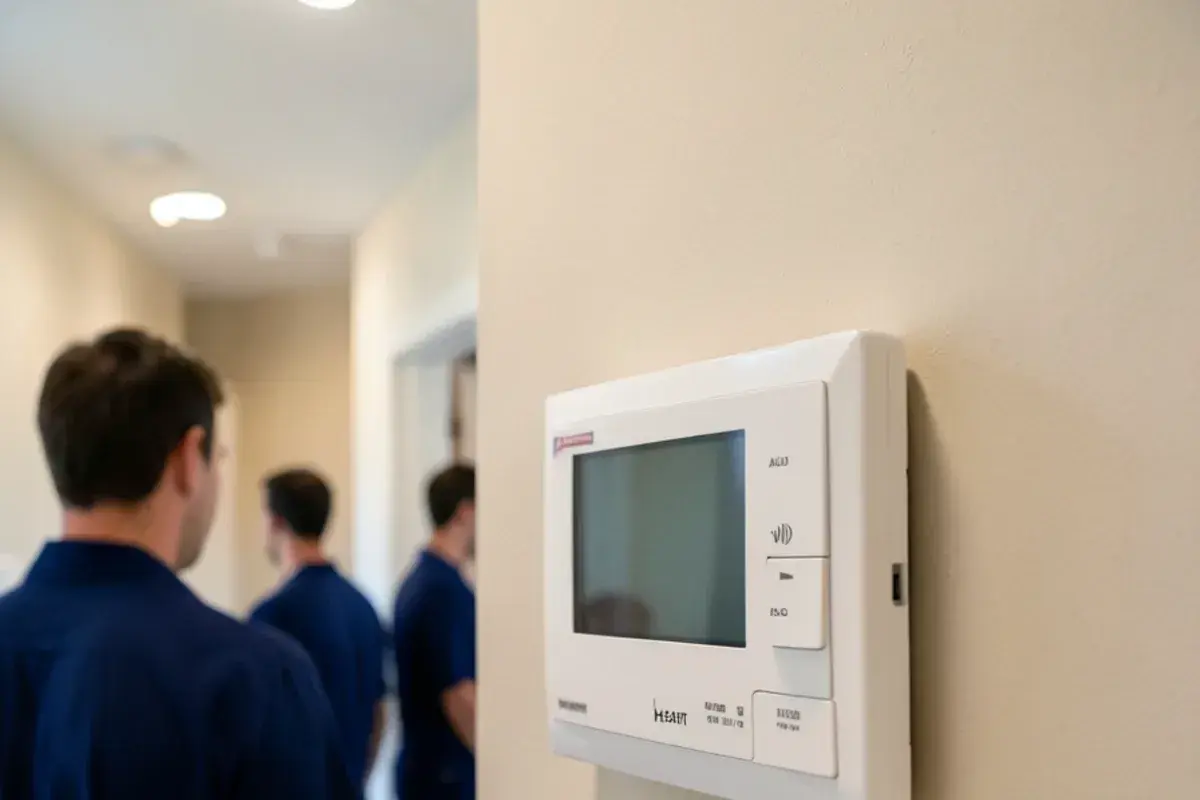
Start with the thermostat. Set it to heat, raise the temperature above the room reading, and set the fan to auto, not on. With the fan on, the blower runs constantly and pushes out room-temperature air whenever the burners rest.
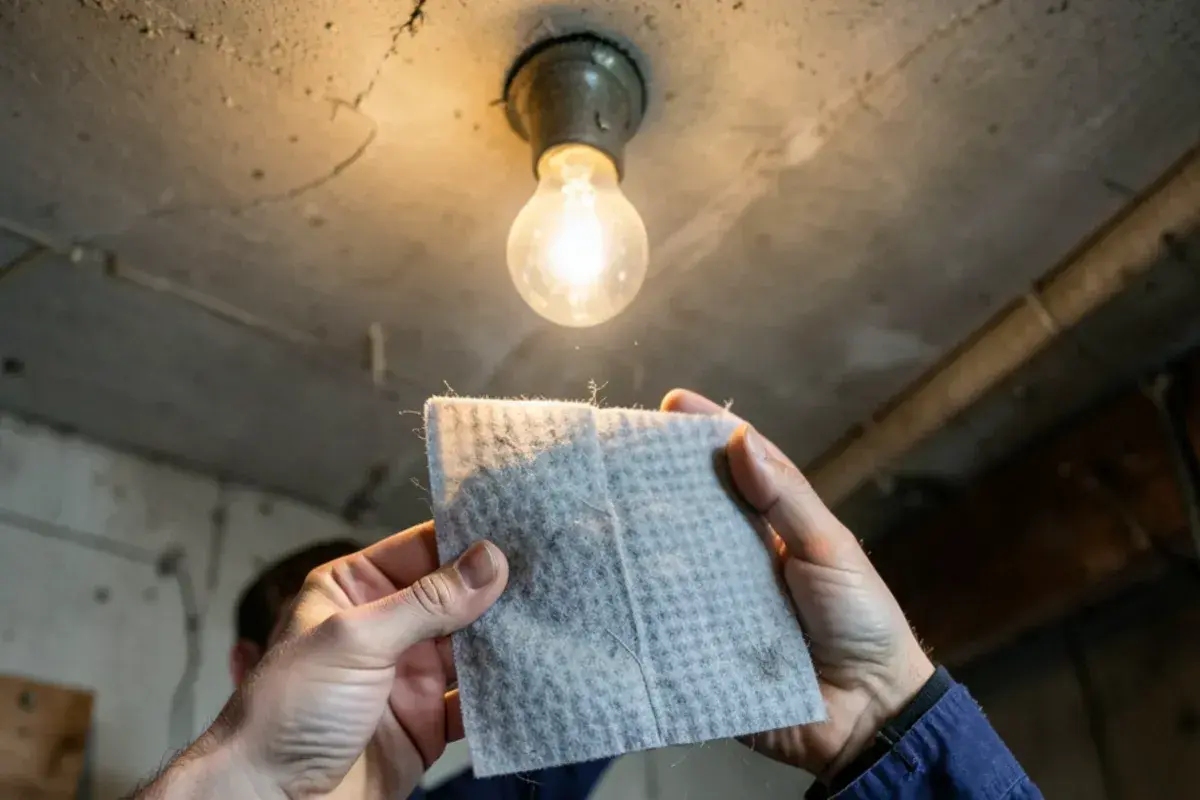
Next, check the filter. Slide it out and hold it to a light. If you cannot see light through it, replace it. A clogged filter starves the furnace of air, the heat exchanger overheats, and a limit switch shuts off the burners while the blower keeps going.
Then look at the outside vents. In Western New York a high-efficiency furnace can shut off when snow or ice blocks its white plastic pipes. Our guide to furnace vents and lake-effect snow shows what to look for.
Finally, check the power switch near the furnace and the breaker. Do not open the burner compartment, touch the gas valve or try to relight a pilot. Those jobs are for a technician.
ENERGY STAR advises inspecting, cleaning or changing the filter in your furnace once a month during the heating season. In a Buffalo winter that is easy to forget, because the furnace runs from fall into spring. Put a reminder on the calendar and keep a spare in the basement.
Why does the air go warm, then cold, then warm again?
A furnace that cycles on and off without heating the house is usually protecting itself. Inside the cabinet, a high-limit switch watches the temperature of the heat exchanger. If airflow drops, the switch opens, the burners shut off and the blower keeps running to cool the metal. When it cools, the burners try again.
That pattern points to restricted airflow. The usual causes are:
- A clogged filter. This is the first thing to rule out.
- Closed or blocked registers. Closing too many vents raises pressure in the ducts.
- A failing blower motor or a dirty blower wheel. The fan moves less air than it should.
- An undersized return. Common in older homes where a return was added late.
ENERGY STAR's maintenance checklist warns that a dirty burner or cracked heat exchanger causes improper burner operation, which is why those two get a look on every visit. Do not tape over a limit switch or bypass any safety. A switch that trips again and again is telling you something real.
What does it mean when the burners light and then quit?
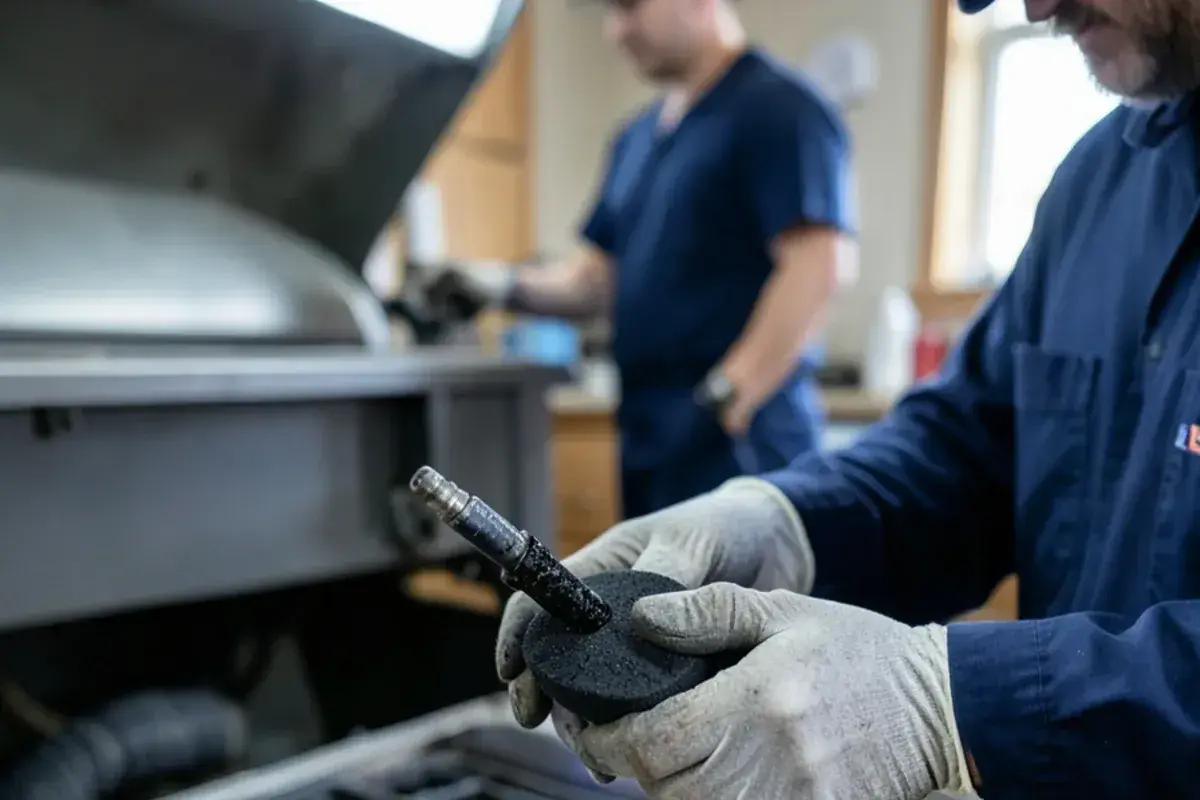
This is the classic dirty flame sensor symptom. The burners ignite, the sensor fails to confirm flame, and the control board shuts the gas off a few seconds later. The blower may then run to cool the furnace, so you feel cold air. The sensor is a thin metal rod that collects a film over time, and cleaning it often fixes the problem.
A failed ignitor looks different. The furnace tries to start, but the ignitor never glows or never lights the gas, and no flame appears. Ignitors are fragile and wear out. The part and the labor are modest next to a new furnace, and that is why we check before anyone talks replacement.
For a rough cost, one unverified contractor figure puts an ignitor or flame sensor repair at about $150 to $350. This is not our quote, and the real number depends on the part and the furnace.
What is safe to try, and when should you stop?
Some steps are safe for anyone. Others are not.
| Safe to try | Stop and call |
|---|---|
| Set the thermostat to heat and the fan to auto | Burners that light, then go out again and again |
| Replace a clogged filter | Soot, scorch marks or a yellow flame |
| Open blocked registers | A burning or hot metal smell |
| Clear snow from outdoor vent pipes | Water pooled under the furnace |
| Reset the furnace switch once | A gas smell or a carbon monoxide alarm |
One reset is fine. Repeated resets are not, because they hide a cause that may be a safety issue.
When is it the ducts, not the furnace?
If the furnace runs normally but some rooms get cold air, the problem may be the ductwork. Ducts that run through unheated basements or crawl spaces can lose a lot of heat, and a disconnected or leaking run delivers little warmth. Weak airflow from one register points to a duct problem. Cold air from every register points back to the furnace. Our duct repair page covers what we check there, and we explain the signs in leaky ducts.
How we look at a furnace that blows cold air
We start by watching it run. A cycle shows us whether the ignitor glows, whether the burners light, how long the flame stays and whether the blower starts at the right time. That tells us which part to test and which to leave alone.
We explain each step, show you the part that failed and give a clear quote before work starts. Customers tell us John explains what is going on with their system. We would rather fix a sensor than sell you a furnace. If the heat exchanger is cracked or the furnace is near the end of its life, we say that plainly, and we cover the choice on our furnace replacement page. When a replacement is the right call, furnace installation explains how sizing, venting and the permit work.
A cracked heat exchanger is a safety question as well as a repair one. The EPA lists cracked furnace heat exchangers among the sources of combustion gases in the home. A technician inspects for it, and if we find one, we show you the evidence and explain what it means for the furnace. Working carbon monoxide alarms on every level are your backup either way.
When should you call a technician?
Call when the filter and settings are fine and cold air continues, when the furnace starts and stops repeatedly, or when you hear clicking with no flame. Smell gas? Leave the house, avoid switches, and call National Fuel at 1-800-444-3130 from outside, or 911. If a carbon monoxide alarm sounds, get everyone out and call 911 first.
For a furnace that quit on a cold night, read what to do with no heat and see emergency furnace repair. Annual furnace maintenance catches a dirty sensor before it fails on a cold night. We serve Lackawanna, about 15 minutes from our Orchard Park base. Call (321) 666-8870, Monday through Friday, 7:30 AM to 5:00 PM.
Quick answers
Is it safe to keep resetting a furnace that blows cold air?
Once is fine. After that, stop. A furnace that shuts itself off is using a safety control, such as the limit switch or flame sensor, to tell you something is wrong. Repeated resets hide the cause and can strain parts. Replace the filter, check the vents and thermostat, and call if the problem returns. Smell gas or hear a carbon monoxide alarm, and go outside first.
Is it normal for a furnace to blow cold air at the start of a cycle?
Yes, briefly. Many furnaces wait for the heat exchanger to warm before the blower starts, so air can feel cool for a minute or two. If the air stays cold for more than a few minutes, or the furnace runs and then goes cold again, something is wrong and it is worth a closer look.
Can a dirty filter make a furnace blow cold air?
It can. A clogged filter restricts airflow, the furnace overheats, and a safety switch shuts the burners off while the blower keeps running. Replace the filter and restart the system. If cold air returns within a day or two, the filter was only part of the problem and the furnace should be inspected.