
Problem Solving
Why Your Heat Pump Is Freezing Up
By John Gach, owner of Vantage Heating and Cooling · Published · Updated
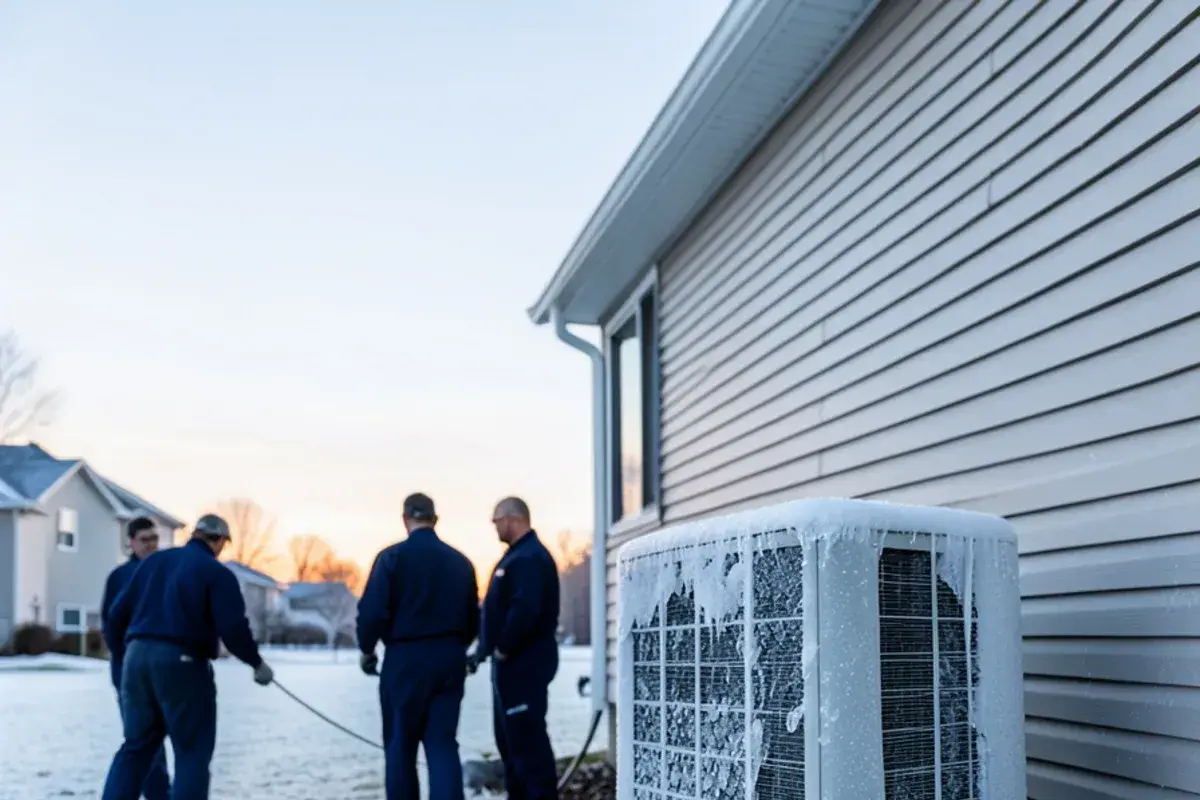
A heat pump freezing up is normal when it is a thin layer of frost that clears within about 15 minutes, and a fault when ice keeps building. Frost happens by design in winter. A solid block of ice on the coil, a fan that stops for good, or a house that is getting cold all point to a problem.
Telling the two apart saves a service call in one case and prevents damage in the other.
Is frost on a heat pump normal?
Yes. A heat pump pulls heat from outdoor air. When the coil drops below 32°F, moisture in the air freezes on it as frost. The unit then runs a defrost cycle, reverses briefly and uses warm refrigerant to melt the frost.
An owner guide hosted by the DOE says defrost typically takes 5 to 15 minutes. During that time the fan may stop or slow, and backup heat may come on to keep the room steady. Meltwater drips at the unit, so make sure it does not pool and refreeze on a walkway. The guide says to call an HVAC professional if the unit is stuck in defrost or covered in ice.
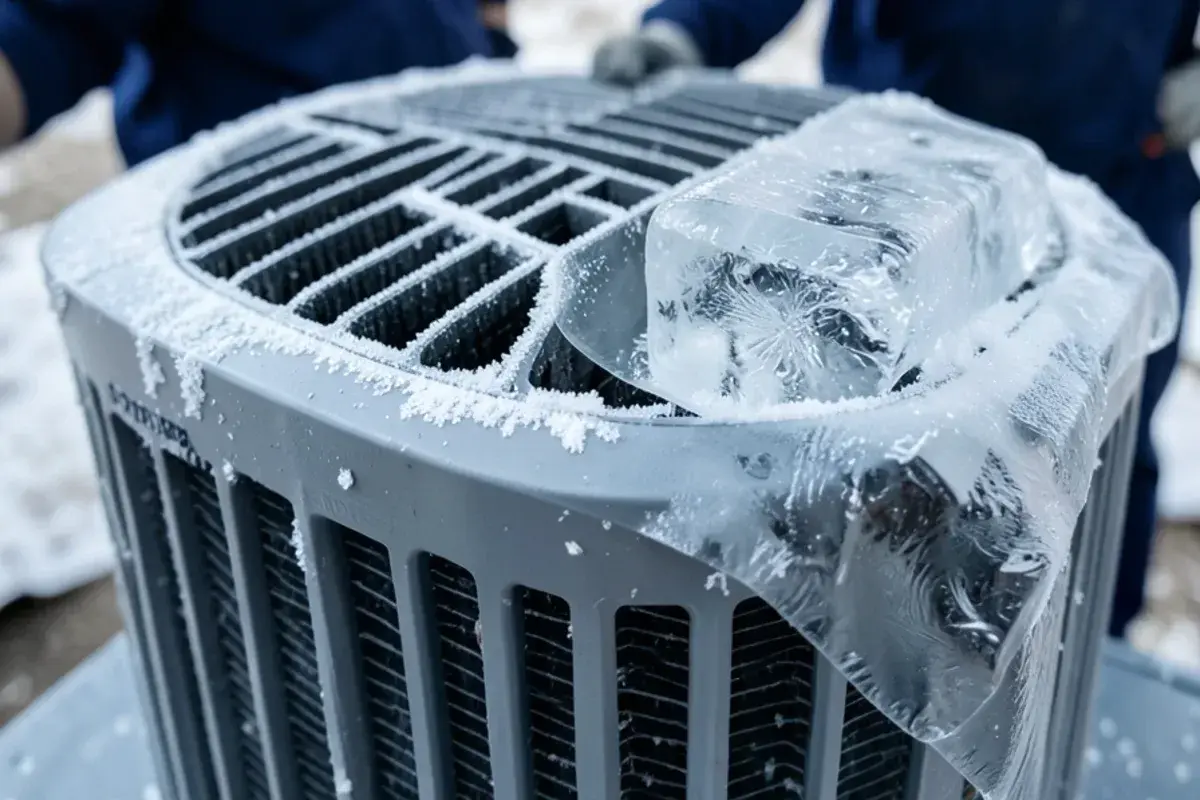
How do you tell frost from a real ice problem?
Use this side-by-side look before you decide whether to call.
| What you see | Normal frost | A fault |
|---|---|---|
| Coil surface | Thin, even white layer | Thick lumps, or ice across the whole base |
| How long it lasts | Clears in a defrost cycle of 5 to 15 minutes | Still there after several cycles |
| Outdoor fan | Pauses or slows during defrost, then resumes | Stays stopped, or ice is jammed against the blades |
| Indoor comfort | Steady, with backup heat possibly kicking in briefly | Air from the vents turns lukewarm and the house loses ground |
| Next step | Leave it alone | Switch off at the thermostat and call |
What makes a heat pump freeze up for real?
Several faults do it, and some are easy to check.
- Blocked airflow outside. Snow, leaves or drifts against the coil keep air from moving across it. The coil gets colder and ices faster.
- Roof runoff. Meltwater that drips from a roof edge onto the unit freezes into a block on top of the coil.
- A failed defrost control. A bad sensor or control board lets frost build without ever starting a defrost cycle.
- Low refrigerant. A leak drops the coil temperature and ice forms. Adding refrigerant without finding the leak only delays the next failure.
- A dirty coil or weak outdoor fan. Both reduce the heat the coil can absorb.
- A sticking reversing valve. The unit cannot switch modes, so defrost never completes.
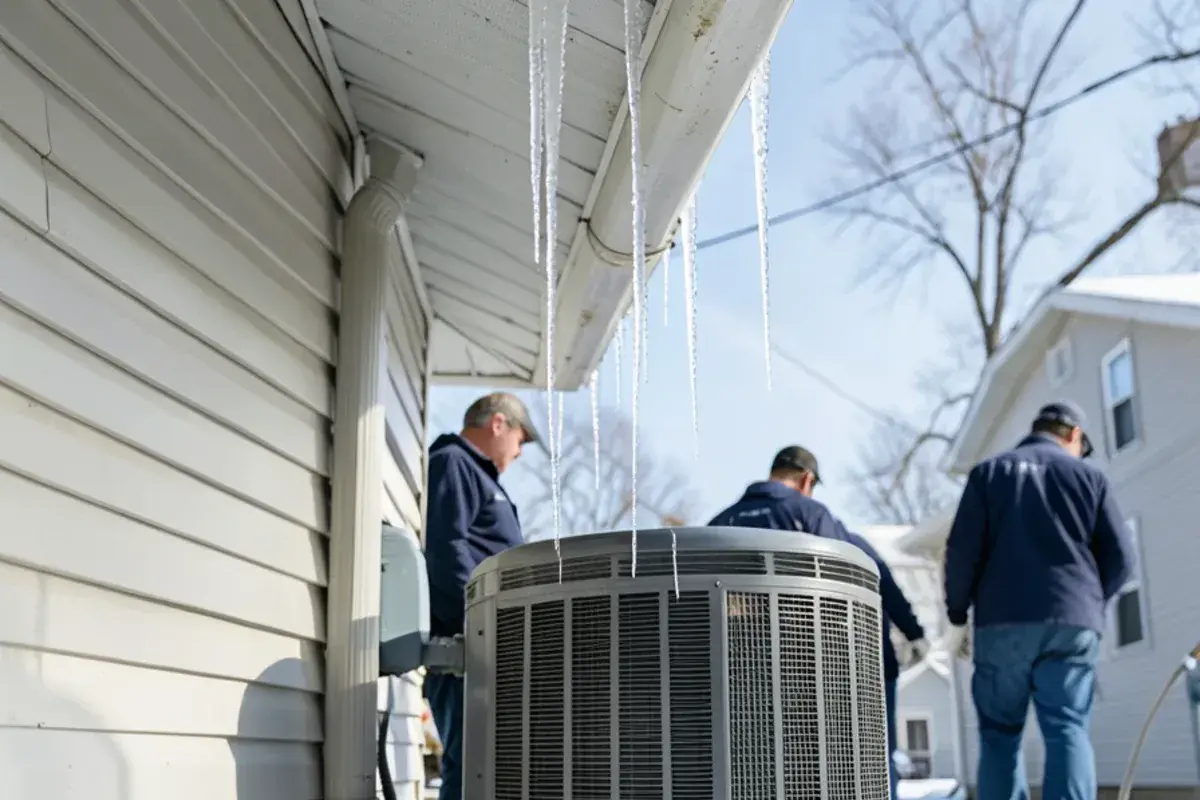
The DOE-hosted owner guide adds a point on placement. It says the preferred installation in cold climates is on the home's gable end, and that a unit under an eave needs a snow deflector or relocation if it collects roof snow and meltwater. It also suggests a snow stand to keep the coil above accumulation. Those are fixes for the cause, which beats chipping at the effect every January.
What if the ice is on the indoor coil?
In summer a heat pump works as an air conditioner, and the indoor coil can freeze. The usual causes are a dirty filter, a blocked return, a failing blower or low refrigerant. Ice there often shows up as weak airflow, then water on the floor once it melts.
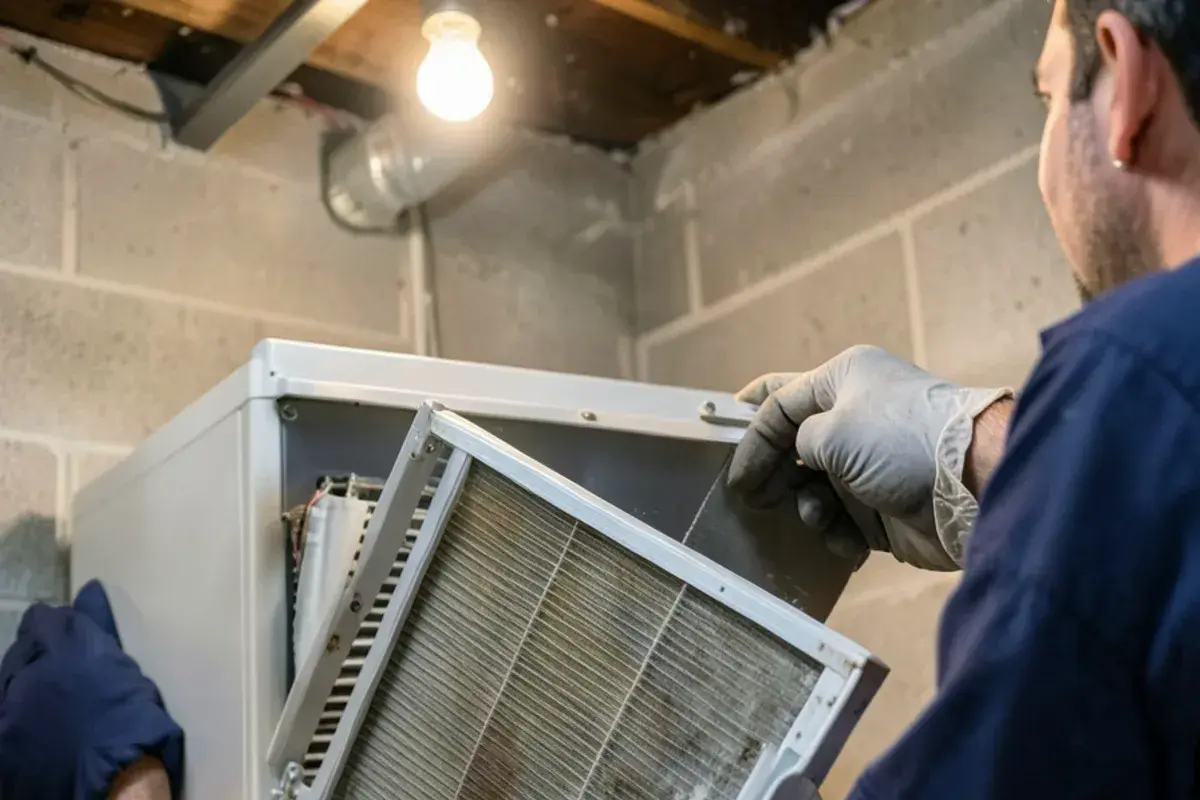
Check the filter first. A clogged one is a common reason and the cheapest to fix. The same owner guide puts ducted filters at roughly every 90 days, and ductless filters at a minimum of monthly, following the manufacturer. Our AC repair page covers the cooling side in more detail.
What should you do when a heat pump is iced over?
Follow these steps in order.
- Switch to off at the thermostat, or to fan only if your system allows it. This stops the compressor and lets the ice melt.
- Clear loose snow and debris from around the unit by hand.
- Do not chip the ice. The fins and tubing are thin and bend easily.
- Check the filter inside and replace it if it is clogged.
- Restart after the ice has melted. If it freezes again within a day, stop and call.
Do not cover the unit for winter. The guide says covering it blocks the airflow it needs, though it does suggest shielding it from roof snow, for example with a snow shield or by placing it under an eave.
Why do snow-belt heat pumps ice up more often?
Lake-effect snow makes the outdoor setup matter more here than in drier places. Wind-driven snow packs against a unit set low to the ground, and wet snow can stick to the coil and block the fan. A unit under a roof edge collects meltwater and ice from above.
The fixes are mostly about placement. A raised stand keeps the coil above drifts, a gutter or diverter keeps roof runoff off the unit, and a clear path lets you check it after each storm. Heat pumps also cope better with a steady thermostat than with big swings, so avoid dropping the setting by more than a few degrees at a time.
What else can the bills and the thermostat tell you?
The DOE-hosted guide names a sudden jump in electricity use on your utility bill as the most common sign a heat pump is not working properly. A heat pump that is icing may be running longer and leaning on backup heat. The guide calls electric strip heat costly and inefficient, and says to consult an HVAC expert if you see it used often.
Compare this winter's bills with last winter's for the same cold stretch. If the usage is far higher, and the outdoor unit looks iced over, you have two clues pointing the same way. The guide also advises against big thermostat swings, which it says can prompt inefficient operation. Change the setting by a few degrees at a time.
How can you prevent it?
- Clear snow from around the unit after every storm, by hand.
- Keep the filter clean, and check it monthly in heavy use.
- Keep shrubs and stored items at least a couple of feet away from the unit.
- Book a spring and fall check so the coil, fan and sensors get a look before the season.
- Watch for frequent backup heat. If it runs often, call.
How we look at a heat pump that keeps freezing
A repeat freeze has a cause, and we find it before touching refrigerant. We watch a full defrost cycle, check the outdoor fan, the coil and the sensor, and look at where the water and snow come from. We also check the indoor side, because poor airflow inside can freeze the coil too.
Handling refrigerant takes certification under Section 608 of the Clean Air Act, so be wary of anyone who offers to top it off without testing for leaks. If your unit is old or was undersized from the start, we say so honestly, and we explain the options on our heat pump repair and heat pump installation pages.
Heat pumps in the snow belt also need a good location. We cover that in do heat pumps work through a Buffalo winter. In West Seneca, about 12 minutes from our Orchard Park base, call us at (321) 666-8870, Monday through Friday, 7:30 AM to 5:00 PM.
Quick answers
How long should a heat pump defrost cycle last?
An owner guide hosted by the Department of Energy says defrost typically takes 5 to 15 minutes. The outdoor fan may slow or stop, and backup heat may run. If the unit is still iced over after several cycles, stays in defrost for long stretches, or the house keeps cooling off, turn it off at the thermostat and call a technician.
Should I pour hot water on a frozen heat pump?
No. Hot water can refreeze into a thicker sheet, crack plastic parts and soak the area around the unit. Switch the system off at the thermostat, let the ice melt on its own, and keep the walkway clear. If the unit stays iced over after that, call for service. Never chip ice off the coil with a tool, because the fins bend and the tubing can puncture.
Is steam coming off my heat pump a problem?
Usually not. During a defrost cycle the outdoor coil warms up and melts the frost, and the melting can look like steam or fog. It is normal for a few minutes. If the unit stays in that mode for long, or ice builds up faster than it clears, that points to a defrost or airflow fault.