
Local Angles
Older Buffalo Homes With Radiators: Boiler Questions Answered
By John Gach, owner of Vantage Heating and Cooling · Published · Updated
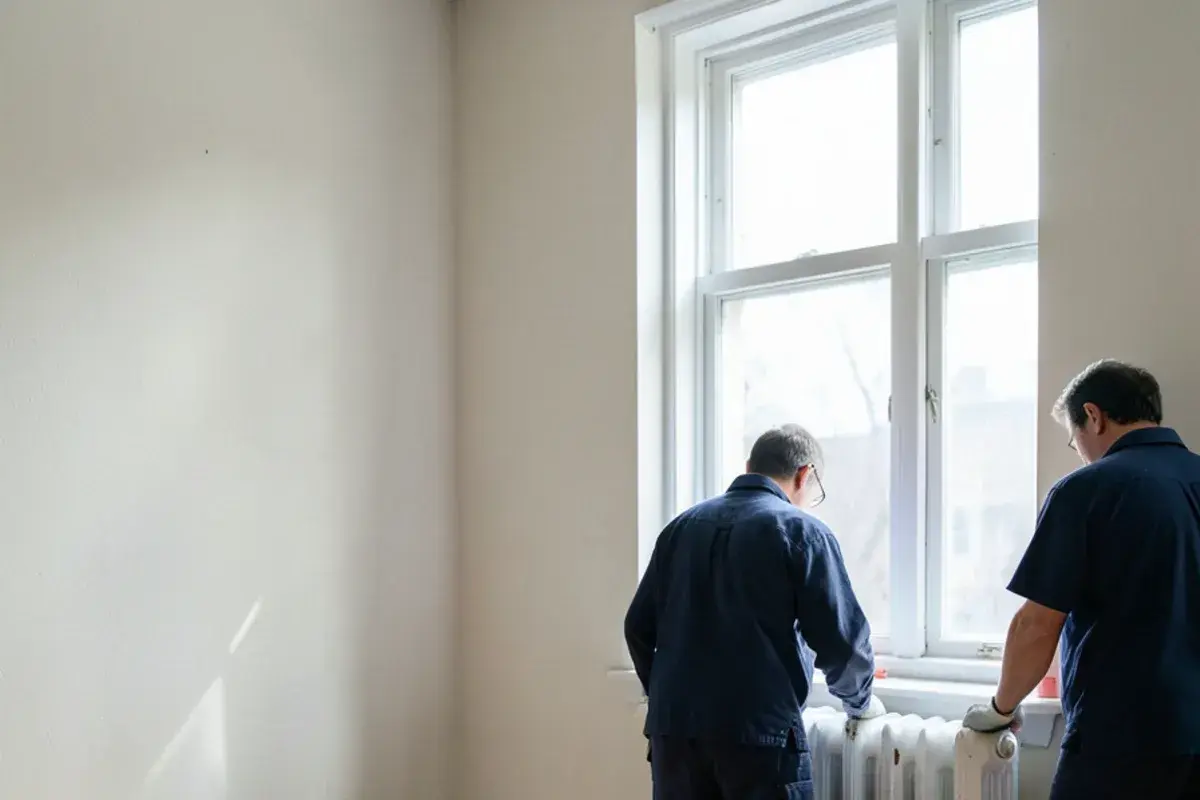
Boilers in older Buffalo homes are usually one of two kinds, steam or hot water, and each has its own checks and its own warning signs. Knowing which one you have makes the rest of the questions easier. Most can be answered in the basement in about ten minutes.
This is a question guide. If you are weighing a swap, our boiler replacement page covers that decision. Here we cover what you are looking at today.
Why do so many Buffalo houses have radiators?
Buffalo built early and built tight. Census data reported by Point2Homes shows 83,498 of 136,850 City of Buffalo housing units, about 61 percent, were built in 1939 or earlier. Heating in that era meant a coal boiler and cast iron radiators, later converted to gas or oil.
Those systems last because there is little in them to fail. A well-kept cast iron boiler can run for decades. The weak points tend to be the controls, the vents and the piping around it, not the radiators themselves.
Is your boiler steam or hot water?
Look at the boiler, not the radiators. Both types feed similar-looking radiators.
| Clue | Steam | Hot water |
|---|---|---|
| Glass tube on the boiler | Yes, shows the water level | Rarely |
| Pressure gauge | Reads very low, a pound or less when running normally | Reads higher, often 12 to 20 |
| Radiator valves | One valve and a small air vent on the end | Often a bleeder screw at the top |
| Pipes | One large pipe to each radiator | Two pipes, one in and one out |
| Sound | Hissing, some banging | Quiet, occasional gurgling |
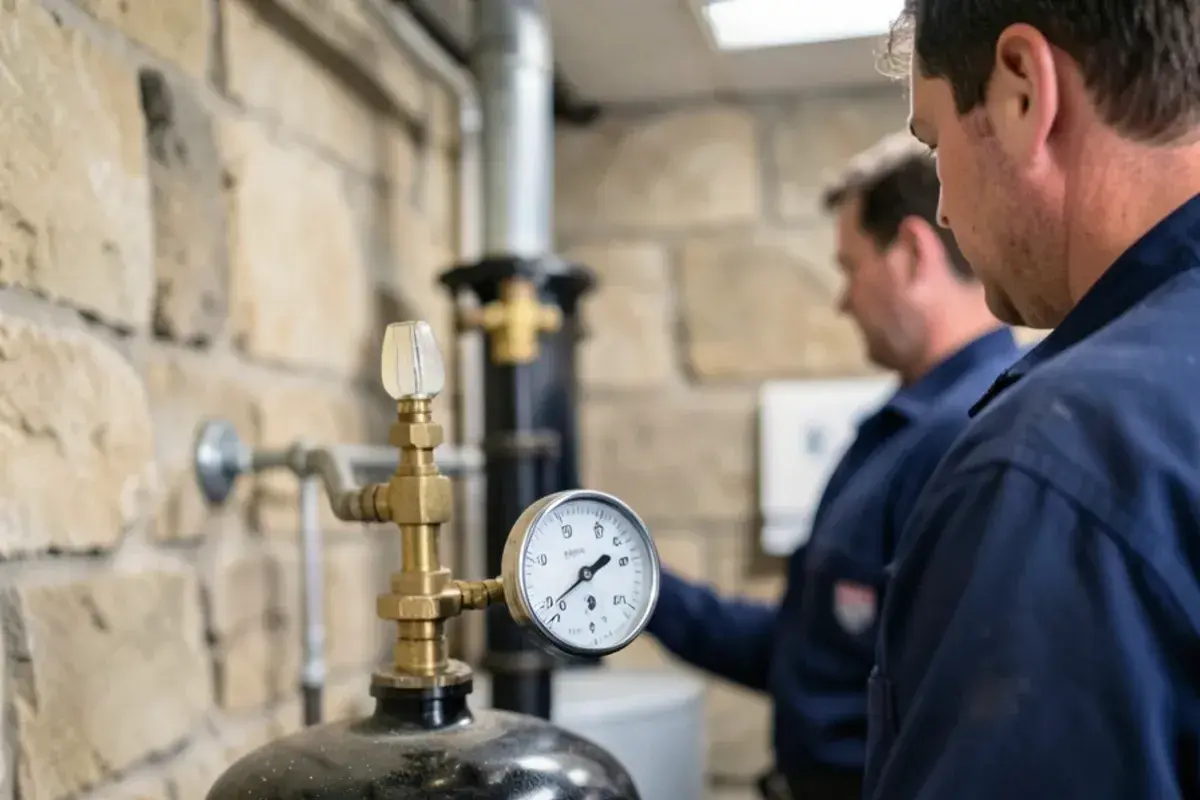
Steam runs hotter than hot water, so steam radiators are too hot to hold. Hot water radiators are warm. If you still cannot tell, take a photo of the boiler and any label and send it with your call.
What should the pressure gauge say?
On a steam boiler, very little. InspectApedia, a home-inspection reference, says residential steam systems are normally designed to run at about 0.2 to 0.5 pounds per square inch, and your boiler's manual gives the setting for your model. A reading well above that is a warning sign, not a setting to raise. It usually means steam is not reaching the radiators, so the boiler keeps pushing.
The common causes of high steam pressure, per the same source, are stuck radiator vents, blocked condensate returns, radiators tipped the wrong way and traps clogged with rust. A clogged gauge line, or the "pigtail" loop under the gauge, can also give a false high reading. Do not turn the pressure control up to force steam through the house. Find the blockage.
On a hot water boiler the numbers are different. Pressure sits higher and should hold steady when the system is cold. A gauge that keeps dropping means water is going somewhere, and a gauge that climbs when the burner runs often points to a tired expansion tank.
What should you check when a radiator stays cold?
Start with the simple causes.
- Check the thermostat and boiler switch. Confirm the boiler is on and the burner fires.
- Check the sight glass or gauge. A steam boiler with low water will shut down. A hot water boiler with low pressure may not circulate.
- Feel the valve. On steam, a fully open valve matters. A half-open valve can make a radiator bang.
- Check the vent. On steam, a clogged air vent keeps steam from filling the radiator.
- Bleed trapped air. On hot water, a bleeder screw releases air. Have a cup ready for the water.
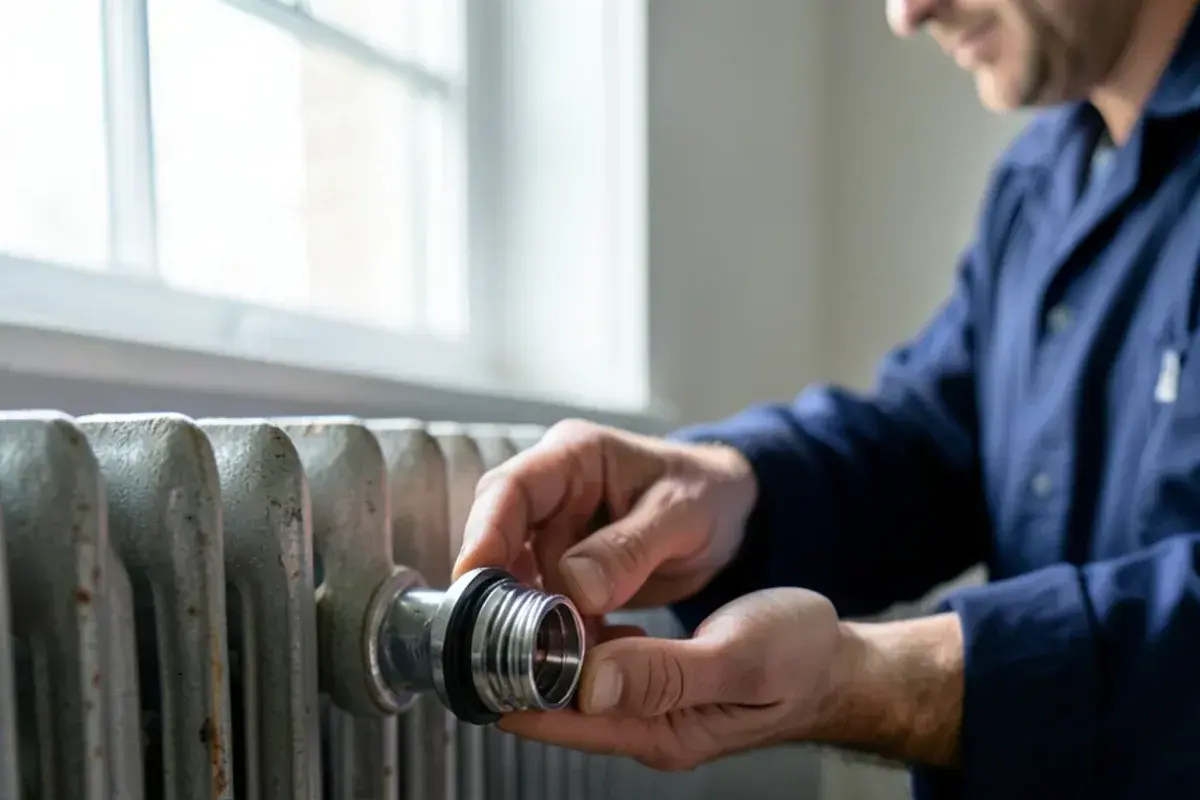
Noise and cold spots usually trace back to a short list of causes:
| What you notice | Steam | Hot water |
|---|---|---|
| One radiator stays cold | Stuck or clogged air vent, closed valve | Trapped air at the top |
| Banging after the burner starts | Water pooled in a sagging pipe or a half-open valve | Air in the line or a loose pipe clamp |
| Cold at the top, warm at the bottom | Rare | Air that needs bleeding |
| Whole house cold | Low water, tripped safety or no burner | No circulation, a dead pump or a stuck zone valve |
| Water at the radiator valve | Packing nut leaking | Packing nut leaking |
If one room is cold and the rest are fine, the problem is usually local to that room. If the whole house is cold, the cause is usually at the boiler. In either case, do not keep adding water to a steam boiler without finding out where it is going.
How we look at an older boiler
We start with the questions that cost the least to answer. Is the system steam or hot water, what fuel does it burn, and what has changed since it was installed? An old boiler that has been converted from coal or oil often has venting that no longer matches what it burns.
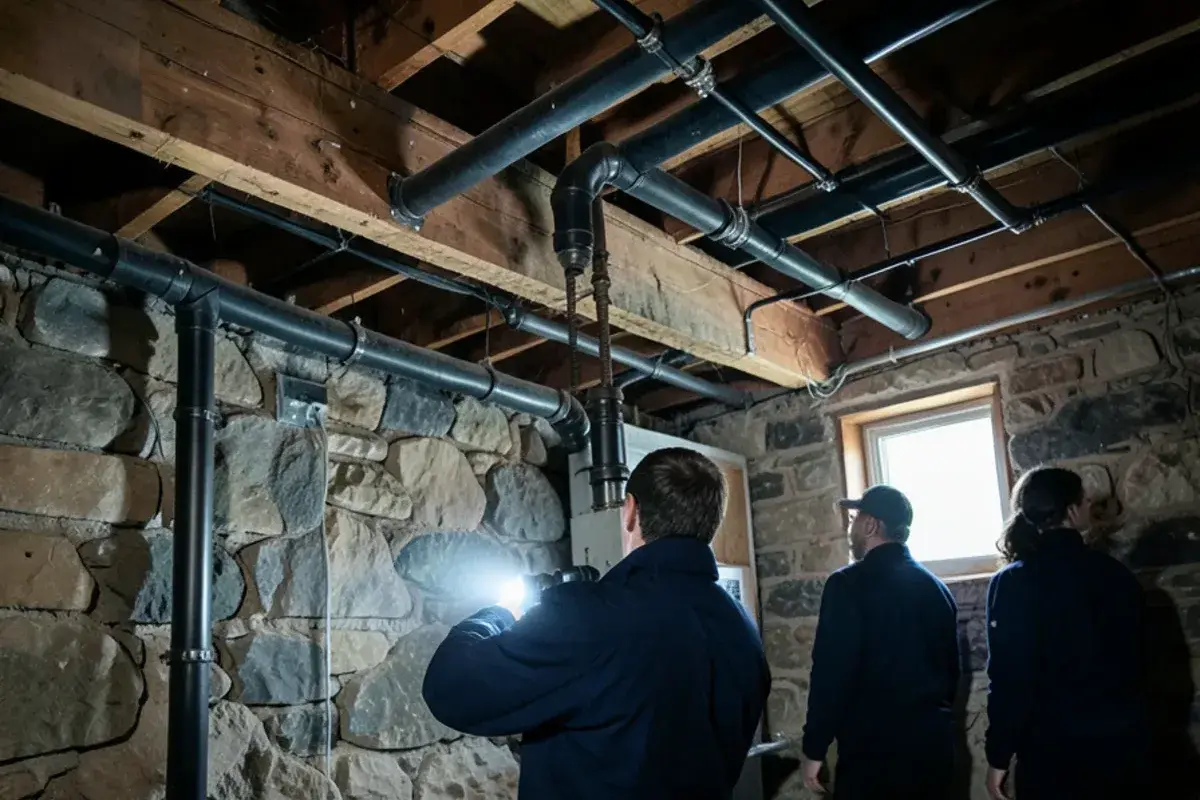
Next we look at the safety controls and the venting, since those decide whether the boiler can run safely at all. On a steam boiler that means the low-water cutoff, and many have a small placard on the jacket that tells you how often the cutoff should be flushed. Follow it. Then we look at piping slope, radiator vents and the burner. We show you what we find, and we quote before work starts.
A repair is often the right call. Customers tell us we have fixed things others wanted to replace, and we say so when a repair makes sense. When a boiler is cracked, leaking at the block or has failed its safety checks, replacement is the honest answer, and we show you the reason before you decide. Our heating overview shows where boilers fit among the other systems we work on.
When does a repair stop making sense?
There is no age at which a cast iron boiler has to go. Weigh these factors together:
- The block itself. Leaks from a cracked section are rarely worth chasing. Leaks from a valve, gasket or fitting usually are.
- Controls and burner. These wear out long before the iron does, and replacing one is a normal repair.
- Repeat visits. A second or third repair of the same kind in a season is a sign to price a replacement.
- Venting. A boiler that now burns gas but still vents like a coal unit may need a new flue liner before anything else.
- The rest of the house. If you plan to insulate, add radiators or finish the basement, size the boiler for the house you will have. Ask for a room-by-room heat-loss calculation, not a guess from the old nameplate.
If the answer is replacement, our boiler repair and boiler replacement pages describe how each job runs. Steam boilers run at higher temperatures than hot water boilers, and the U.S. Department of Energy notes they are inherently less efficient, so ask what each option would do to your fuel use before you decide.
What does a yearly boiler check cover?
A yearly visit is cheap compared with a failure in January. For a steam boiler, a technician tests the low-water cutoff, checks the gauge glass and drains sediment. For a hot water boiler, the check covers pressure, the expansion tank, the circulator pump and the zone valves.
On either type, the burner and flue get a look, because a boiler that burns poorly can make carbon monoxide. Ask what the visit includes before you book. A check that skips the safety controls is not worth much.
Which warning signs mean call now?
Some signs should not wait for a convenient day.
- Smell of gas near the boiler. Leave the house, do not touch switches or light anything, and call National Fuel at 1-800-444-3130 from outside, or 911. National Fuel says that line is staffed 24 hours a day, seven days a week, and that leak investigations are free.
- Carbon monoxide alarm. Go outside first, then call 911. National Fuel lists fatigue, headache, dizziness and nausea as symptoms. New York's Amanda's Law, named for a West Seneca teenager who died in 2009 from a leak at a defective boiler, requires CO alarms in one and two family homes with a fuel-burning appliance, according to the state's Division of Housing and Community Renewal.
- Water on the floor under the boiler or around the pressure relief valve.
- Soot, scorching or yellow flames at the burner.
One customer described calling about a gas smell near an old steam boiler:
“Johnny was super friendly and fast. I called him at 8:30am with a worry about a gas smell in my basement near my old steam boiler.”
That review is from 2018 and is one customer's experience, not a promise of timing. If you smell gas, the gas utility comes first.
Does a boiler home need anything else?
Radiator homes are often the hardest to cool, because there are no ducts. If summer comfort is the question, look at ductless mini splits rather than cutting ducts through plaster. In neighborhoods like Kenmore, with dense early 1900s houses, that is a common path.
If you are in Lancaster or elsewhere around Buffalo, call us with a description of your system. We will tell you honestly whether a visit makes sense. We are at (321) 666-8870, Monday through Friday, 7:30 AM to 5:00 PM.
Quick answers
Why does my steam boiler pressure keep climbing?
High pressure on a steam boiler usually means steam cannot get out to the radiators. Stuck air vents, blocked returns and clogged traps are the usual causes, according to InspectApedia. Do not raise the pressure control to compensate. Shut the boiler off if the gauge keeps rising past its normal range, and call for a diagnosis.
Is it normal for a radiator to bang or knock?
A little noise as pipes heat up is common, but steady banging in a steam system usually means water is trapped in a pipe that has settled out of pitch, or a vent is stuck. In a hot water system, knocking often points to air. Neither is an emergency, but both are worth having looked at.
Can an old boiler leak carbon monoxide?
Yes. Any fuel-burning boiler can if it is poorly vented or burning badly. Keep working carbon monoxide alarms on every floor, including the basement. If one sounds, or you feel headache, dizziness or nausea, go outside first and call 911. Do not stay to look at the boiler.
How long should an old cast iron boiler last?
There is no fixed number, because water quality, how often it was serviced and how hard it works all matter. Cast iron blocks often outlast their controls and burners by many years. We judge by condition: leaks at the block, cracked sections and repeated safety shutdowns point toward replacement, while a worn part usually means a repair.
Sources
- InspectApedia, steam boiler pressure and what high readings mean
- NYS Division of Housing and Community Renewal, Amanda's Law memorandum on carbon monoxide alarms
- U.S. Department of Energy, HVAC guide, steam versus hot water boiler efficiency
- Point2Homes, Buffalo NY demographics (Census data on housing built 1939 or earlier)
- National Fuel, Fall 2025 customer newsletter, carbon monoxide and gas safety