
Comparison Guides
Heat Pump vs Furnace: Which Fits a New York Home?
By John Gach, owner of Vantage Heating and Cooling · Published · Updated
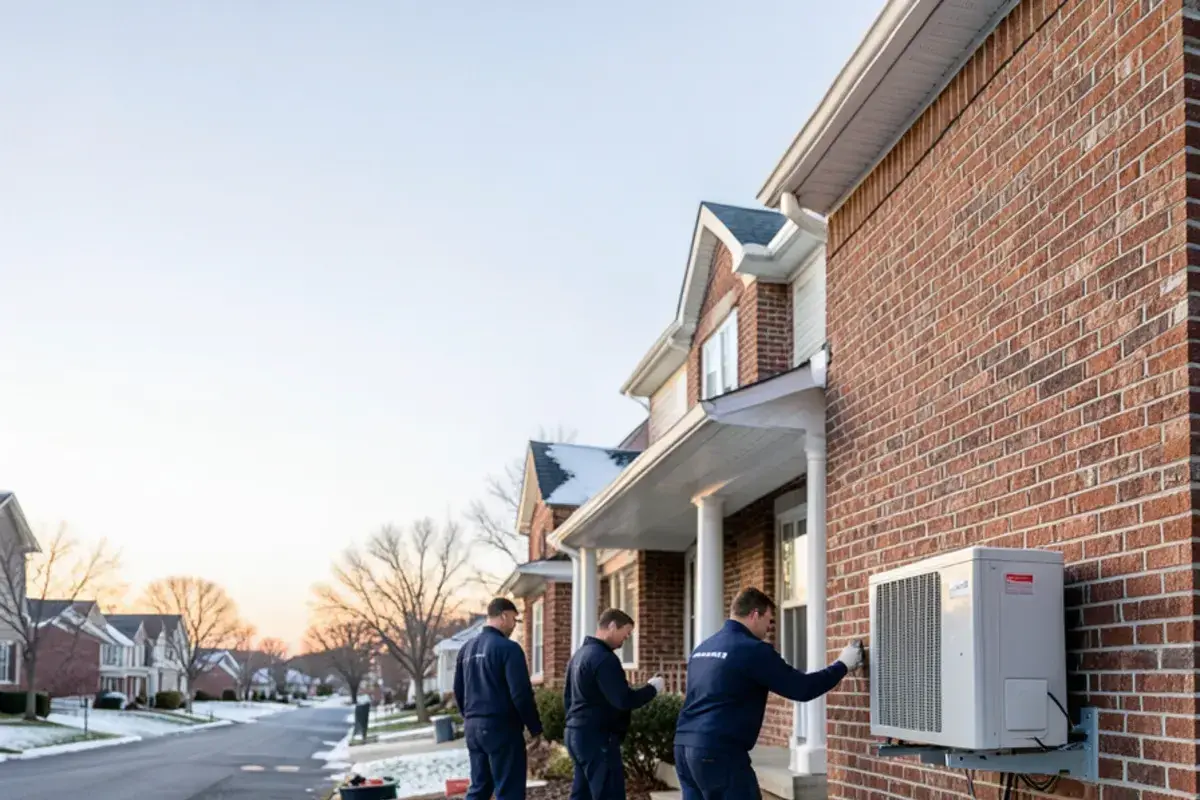
For a New York home, the choice between a heat pump and a furnace comes down to your house's heat loss, your fuel prices, and how much risk you want on the coldest nights. A gas furnace is the proven default in Western New York. A cold-climate heat pump can replace it in many homes, and pairs well with a furnace in others.
Neither answer is right for every house. Here is how we compare them.
How does each one make heat?
A furnace burns natural gas, propane or oil and blows warm air through your ducts. Its output barely changes with the weather, which is why it has been the standard in the snow belt for decades.
A heat pump moves heat from outdoor air into the house using electricity and refrigerant. Moving heat takes far less electricity than making it, though that advantage shrinks as the outdoor temperature falls. ENERGY STAR's cold-climate label sets a floor for this: at 5°F, a qualifying model must have a coefficient of performance of at least 1.75, meaning about 1.75 units of heat for each unit of electricity, and must keep at least 70 percent of its 47°F heating capacity.
Will a heat pump keep up in a Buffalo winter?
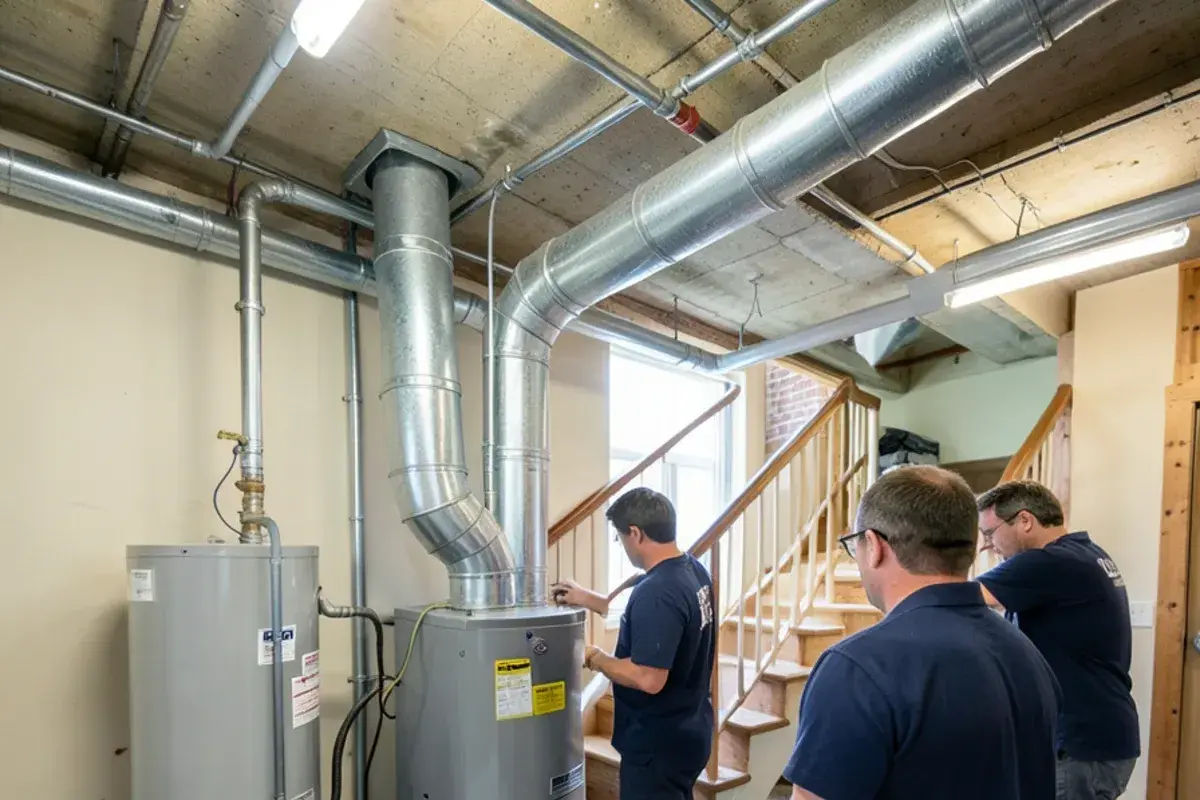
Buffalo averages about 6,466 heating degree days a year, according to NOAA's 1991-2020 normals, and roughly 50 nights a year fall to 20°F or below. That is a long, cold season, and it is where heat pumps are tested.
Three things decide whether one carries your house:
- Heat loss. A tight, insulated house needs less heat per degree than a drafty one.
- Sizing. The unit must be chosen from a load calculation, not from the size of the old furnace.
- Backup. Many installations keep electric strip heat or a gas furnace for the coldest hours.
We cover this in more detail in our post on how heat pumps work through a Buffalo winter.
What does a cold-climate label actually promise?
ENERGY STAR sets separate efficiency floors for cold-climate heat pumps. A ducted split system must reach at least 8.1 HSPF2 and 15.2 SEER2. A ductless split must reach at least 8.5 HSPF2 and 15.2 SEER2. Every model must also pass a controls verification test showing that those low-temperature numbers hold up with the unit's own controls running.
Read that as a floor, not a forecast for your house. The label tells you how the equipment behaves in a lab at 5°F. It does not tell you how many hours your particular house will spend below the point where the heat pump alone can keep up. That crossover temperature, often called the balance point, comes out of the heat loss calculation and the unit's capacity chart. It is the number that decides whether you need a furnace behind the heat pump.
What does each option cost?
Equipment price is only part of the picture. A furnace replacement is a familiar job with one price. A heat pump may need electrical work, a spot for the outdoor unit, and sometimes duct changes, so the quote has more moving parts.
| Factor | Gas furnace | Heat pump |
|---|---|---|
| Heating source | Natural gas, propane or oil | Electricity |
| Cooling too? | Needs a separate AC | Yes, one system does both |
| Cold performance | Steady | Falls as outdoor temperature drops |
| Typical add-ons | Venting, gas line | Electrical, outdoor pad or bracket |
| Backup needed? | No | Often, on the coldest days |
Third-party cost guides give a sense of the spread, and none of them is our quote. EnergySage, updated March 19, 2026, puts the average ducted air-source heat pump at $14,529 before incentives, based on marketplace quotes. Project Cost Atlas, updated December 28, 2025, puts a full HVAC replacement at $8,125 to $18,125 per system, about $11,875 typical, and that is an aggregator estimate. A furnace-only job usually sits below a ducted heat pump job, but your house, ducts and electrical panel move both numbers.
Running cost depends on the price of gas against electricity at your address. Most of Buffalo is National Grid electric, and parts of Erie County are NYSEG. Look at your actual bills before trusting any average.
What rebates apply right now?
Programs change, so check each current program page before you plan around one. As of October 2026:
- The federal Section 25C credit expired December 31, 2025, so heat pumps installed in 2026 do not qualify.
- NYS Clean Heat offers heat pump rebates through your electric utility, now covering homes with one to four units. Only a participating contractor can file, so confirm that with any contractor you hire.
- HEAR is an income-based program run through NYSERDA. Check NYSERDA for current limits.
- National Fuel no longer offers direct incentives for gas appliances as of January 1, 2026. See its rebate page for what remains.
Our guide to HVAC rebates in New York goes through the checklist.
What can add to a heat pump quote that a furnace swap does not have?
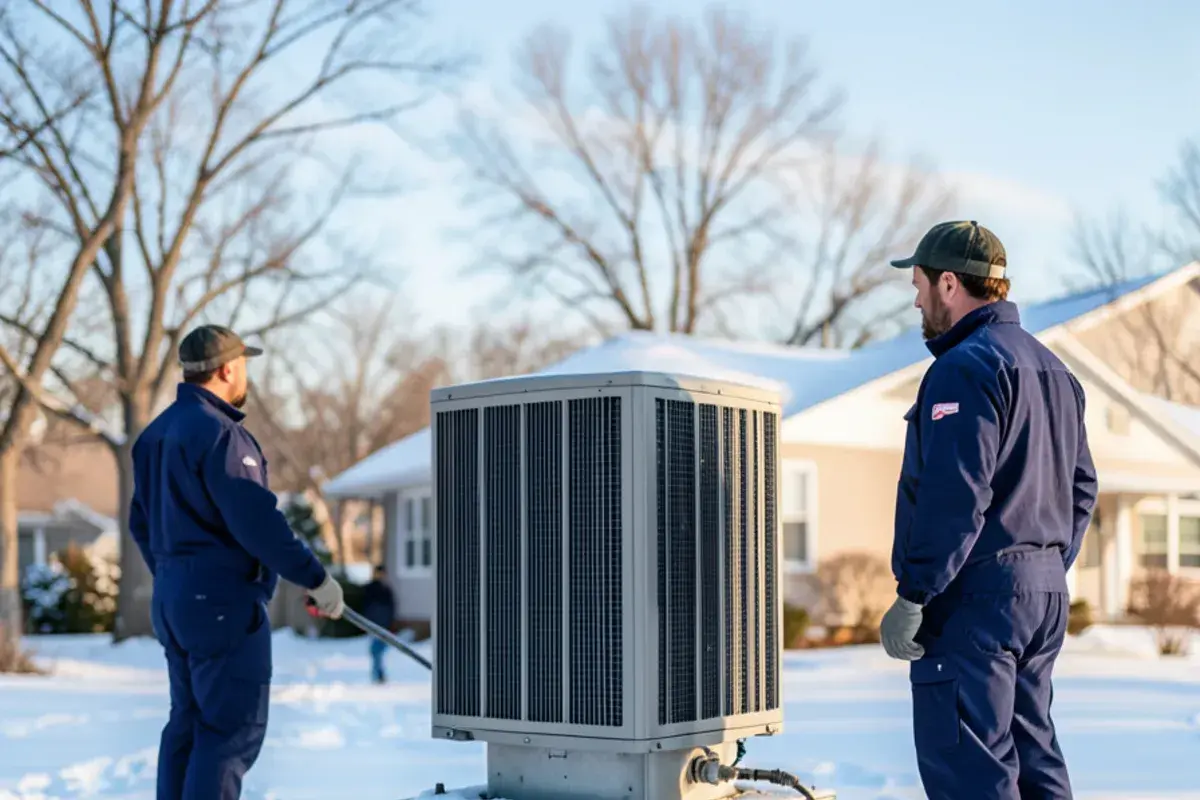
A furnace replacement mostly reuses what is already there: the gas line, the venting path, the return and supply ducts. A heat pump job asks different questions, and these are the ones to see priced out before you sign:
- Electrical capacity. The service panel needs room for a new breaker, and an older or full panel may need work first.
- Outdoor unit location. The unit needs clearance from walls, a level base or a bracket, and a place where drifting snow and roof runoff will not bury or drip on it.
- Duct condition. A heat pump delivers cooler supply air than a furnace, so it needs more airflow, and undersized or leaky ducts show up as noise and weak heat. ENERGY STAR says sealing and insulating ducts can improve a system's efficiency by as much as 20 percent.
- Defrost and drainage. In winter the outdoor coil frosts and periodically defrosts. The meltwater needs somewhere to go besides a walkway that will freeze.
- The old equipment. Capping the gas line, or keeping the furnace as backup, changes the scope and the permit.
If a quote leaves these out, ask about them. They are the line items that appear later as change orders.
How we weigh heat pumps against furnaces
We start with the house, not the product. A heat loss calculation tells us how much heat the house needs on a design night, and the answer often settles the argument. A well-sealed newer home in Lancaster's subdivisions may suit a heat pump well. A 1950s house with thin walls may be a better candidate for a furnace, or for a heat pump with a furnace behind it.
We also ask what you want from the system. If you want cooling and heating from one outdoor unit, that points one way. If you want the lowest risk in a deep freeze, it points another. We explain the trade-offs and then give a clear quote for whichever you choose, with no pressure to pick the more expensive path.

Which houses tend to suit which system?
These are patterns we look for, not rules. A load calculation overrides all of them.
| House | Often leans toward | Why |
|---|---|---|
| Newer, tight, insulated, with ducts already in good shape | Heat pump, possibly alone | Low heat loss keeps the unit above its balance point most of the winter |
| Mid-century house, original windows, modest insulation | Heat pump plus furnace backup | Cold nights exceed what the heat pump can supply by itself |
| Pre-1940 house with radiators and no ducts | Boiler repair or a ductless heat pump, not a ducted swap | There is nothing to attach a ducted system to |
| House with a failing AC and a healthy furnace | Heat pump added alongside the furnace | One outdoor unit replaces the AC and takes the milder-weather heating |
About 61 percent of City of Buffalo housing units were built in 1939 or earlier, according to Census data reported by Point2Homes, so the radiator-house row matters here. Our ductless mini-split page covers the no-duct route, and our boiler replacement page covers staying with hot water.
What should you decide first?
Work through these in order:
- Does your current ductwork deliver enough air for either system?
- What do your gas and electric bills look like in January?
- Do you want cooling replaced at the same time?
- How comfortable are you with a backup source on the coldest nights?
- Is your electric panel ready for a new circuit, and where would the outdoor unit sit?
- If you want a rebate, which electric utility serves you, and does the contractor you are considering participate in NYS Clean Heat?
Talk through your own house
If you are in Lancaster or nearby, call (321) 666-8870 and tell us what you have now. We will talk through heat pump installation against furnace replacement for your house and give you a clear quote before any work starts.
Quick answers
Can a heat pump heat a house through a Buffalo winter?
A properly sized cold-climate heat pump can carry many homes through the cold, and a tight, insulated house has the best odds. Older, leaky houses may need a backup source on the coldest nights. The answer depends on your heat loss, so it should come from a load calculation, not from the brochure.
Is a heat pump cheaper to run than a gas furnace?
It depends on the price of gas against the price of electricity, and on how cold it is outside. A heat pump gets more heat from each unit of electricity in mild weather and less in deep cold. Compare your current National Fuel gas rate and your electric rate before assuming either one wins.
Do I need to remove my furnace to install a heat pump?
No. Many homes keep the furnace and add a heat pump that handles most of the heating season, with the furnace stepping in on the coldest days. That setup is often called dual fuel. It costs more up front than either system alone, but it keeps a proven backup in place.
Sources
- NOAA 1991-2020 climate normals for Buffalo, NY: heating degree days
- NYS Clean Heat: heat pump rebates through your electric utility
- NYSERDA: HEAR program status and income limits
- National Fuel: energy efficiency rebate program
- ENERGY STAR: cold climate heat pump criteria (HSPF2, SEER2, COP at 5°F)
- EnergySage, How much does a heat pump cost (updated March 19, 2026)
- ENERGY STAR, Heating and Cooling: duct sealing can improve efficiency by as much as 20 percent
- NYS Clean Heat: contractor requirements for heat pump rebates