
Cost and Insurance
Furnace Replacement Cost in Buffalo: What Changes the Price
By John Gach, owner of Vantage Heating and Cooling · Published · Updated
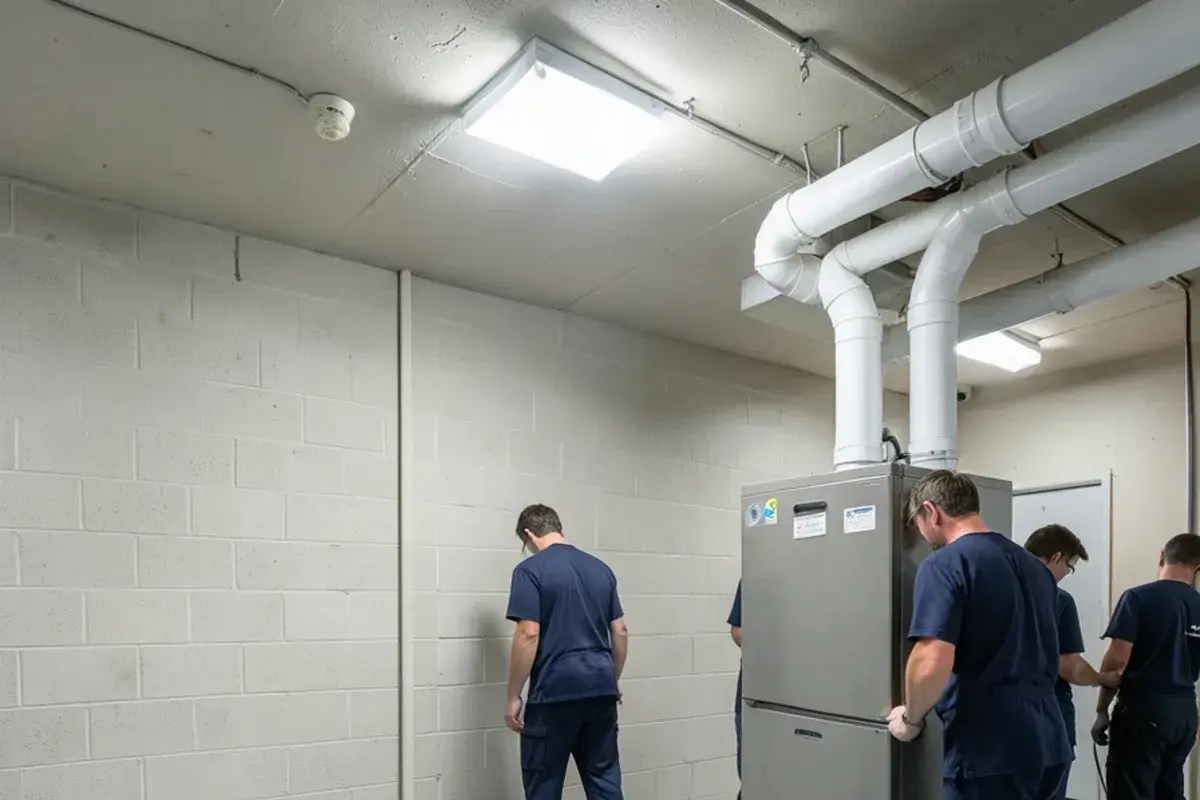
Furnace replacement cost in Buffalo depends on the furnace, the venting, the ductwork and the permit, and national guides put the total at roughly $2,800 to $10,000 for most gas furnaces. These are third-party national figures, not our quote, and we publish no price list.
Angi's 2026 data, reported by NerdWallet, puts the average near $4,800, with a range of about $2,823 to $6,888. ServiceAgent's 2026 aggregate lists gas furnaces at $3,800 to $10,000. We publish no price because the price of your furnace depends on your house.
The point of this article is to show you what changes the number, so that two quotes become comparable and the one you pick fits your home.
How much does a new furnace cost, by the numbers?
The sources above agree on the shape of the cost, even where they disagree on the total.
| Cost piece | National range (ServiceAgent, 2026) |
|---|---|
| Furnace unit | $1,500 to $6,000 |
| Labor | $1,500 to $3,000 |
| Permits, disposal and materials | $500 to $1,000 |
| Duct repairs, if needed | $500 to $3,000 |
| Oil tank replacement, if relevant | $1,000 to $6,000 |
ServiceAgent is an aggregator that gathers figures from many contractor and marketing sites, so treat its ranges as a rough guide. Local labor and permit costs vary, and your own quote will be more reliable than any national average.
What changes the price of a furnace replacement?
Six things move a quote more than anything else.
- Efficiency. A standard-efficiency furnace costs less than a high-efficiency model. Buffalo has a long season, about 6,466 heating degree days a year by NOAA's 1991-2020 normal, so efficiency tends to pay back sooner here.
- Size. Bigger is not better. Oversizing causes short cycling and uneven comfort. Right-sizing starts with a load calculation. The NYS energy code calls for equipment selection under ACCA Manual S, based on loads from Manual J or another approved method.
- Venting. Swapping a chimney-vented furnace for a high-efficiency one means new plastic vent and intake pipes through a wall, plus a condensate drain.
- Ductwork. Old, undersized or leaky ducts limit what any furnace can do, and fixing them adds cost. A yearly furnace maintenance visit is a good time to ask whether your ducts are holding the system back.
- Features. Variable-speed blowers and two-stage burners cost more and make most houses more comfortable.
- Extras. Thermostat, humidifier, air cleaner and carbon monoxide alarms are optional on the quote, but sometimes sensible.
What does 80 percent versus 97 percent efficiency mean for the price?
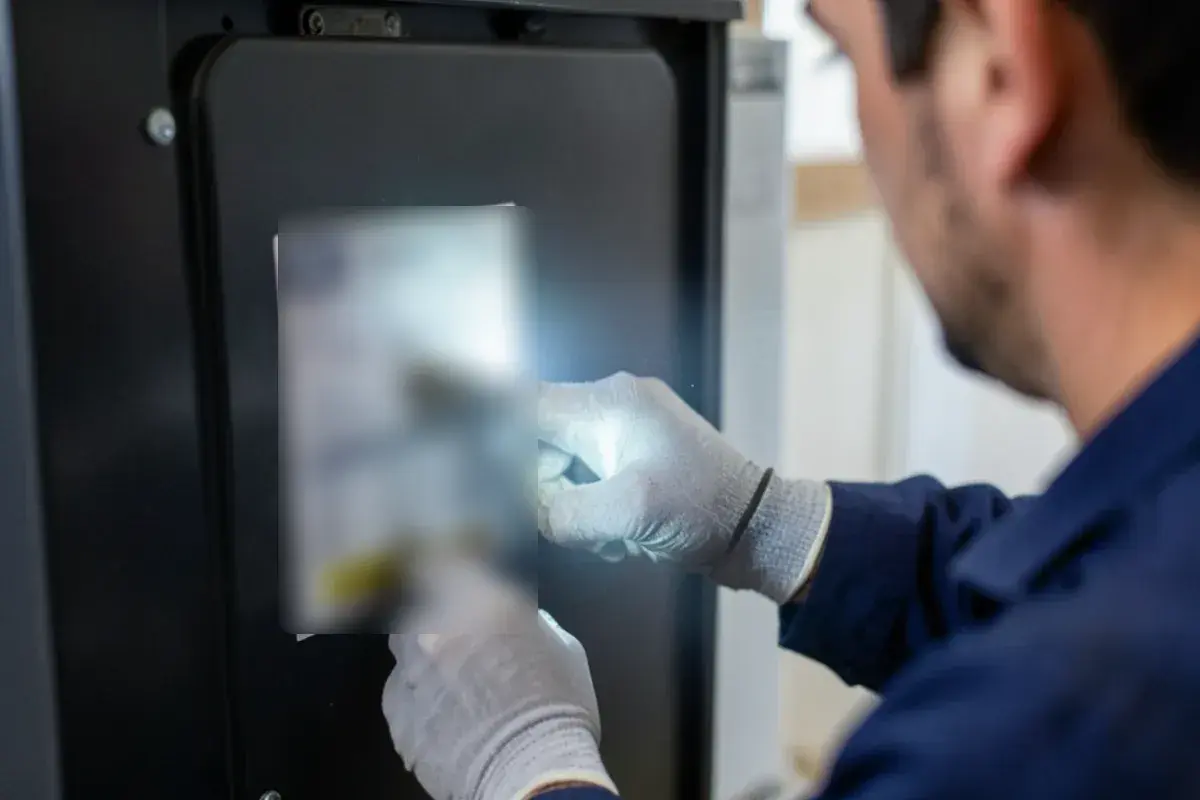
Efficiency is shown as AFUE, the share of the gas that becomes heat in the house. A standard-efficiency furnace vents hot exhaust up a chimney. A condensing furnace pulls so much heat out of the exhaust that it can vent through plastic pipe, and it makes water that must drain somewhere. That is why the gap between the two is more than the price of the unit.
ENERGY STAR's key product criteria list a rating of 97% AFUE or greater for gas furnaces in its North region, so confirm on its map how your ZIP code is classed. A model at that level usually costs more up front, and the longer your heating season, the sooner the saving shows up. A shorter payback is not guaranteed. It depends on how your home loses heat, what you pay for gas and how many hours the furnace runs.
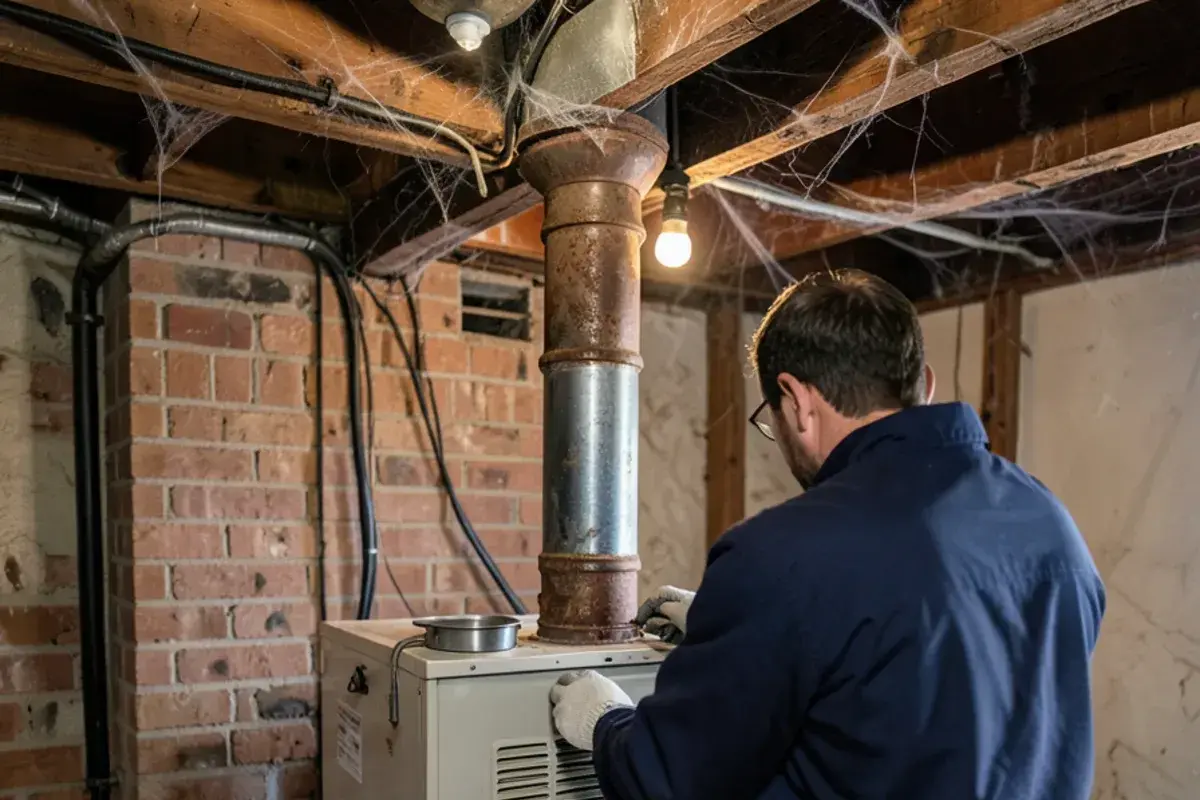
The venting is where older houses surprise people. If a new condensing furnace leaves the chimney, the water heater often stays on it, and that chimney may now be oversized for a single small appliance. A liner or a different venting plan for the water heater can show up as its own line on the quote. Ask about it before you compare totals.
What happens during a furnace replacement?
Knowing the sequence helps you read a quote, because each step is a line of cost or a place where corners get cut.
- Load calculation and site visit. The size comes from the house, not from the old furnace's label.
- Quote. Equipment, venting, duct changes, permit and removal, all laid out in a clear quote before work starts.
- Permit. Pulled before work begins. In Buffalo, work started before a permit is issued can be charged double fees under Chapter 175.
- Installation. Old unit out, new unit set, gas line, venting, condensate drain, wiring and thermostat connected, ducts sealed at the new plenum.
- Start-up and testing. Gas pressure, temperature rise, safety switches and carbon monoxide at the vent, checked and recorded.
- Inspection and walkthrough. The municipality inspects where it requires one, and you get the manuals and the warranty details.
If you are also looking at moving from a furnace to another system, our furnace installation page covers the installation side in more detail.
Are there rebates that lower the cost?
Fewer than last year. The federal Section 25C credit expired December 31, 2025 under P.L. 119-21, so do not count on it for a furnace installed in 2026. National Fuel's Fall 2025 newsletter says that, effective January 1, 2026, direct incentives for gas-fired appliances are no longer available. It still runs weatherization and thermostat incentives, so check its current rebate page. Our guide to HVAC rebates and tax credits in New York lists what to verify before you sign.
Why is Buffalo different from the national average?
Homes here carry old systems and older construction. The Census data says about 61 percent of City of Buffalo housing units, 83,498 of 136,850, were built in 1939 or earlier (Point2Homes, from Census data). Houses that old often have a chimney, oversized legacy equipment, tight basements and ducts added decades after the house was built. Those details show up as venting, duct and access work on a quote.
Permits matter too. The City of Buffalo requires a Heating Contractor license for heating work, and Permit and Inspection Services handles the paperwork. Buffalo Code Chapter 175 allows double fees if work starts before a permit is issued. Other towns in Erie County license contractors in their own ways, so confirm with your municipality, including in West Seneca.
How we look at a furnace quote
We start with the house, not the product. We look at the current furnace, the venting, the ducts and the gas line, and we ask what is not working: cold rooms, noise, repair history, a rising gas bill. Then we explain the options and their trade-offs, and we give you a clear quote before work starts.
Customers tell us we explain each step and do not push. One reviewer asked about zoning and was told, with reasons, why it would not be the best option for her. We would rather lose a sale than sell you something that does not fit. Coverage on a new furnace depends on the part and manufacturer, and we go over it before you approve the work.
Should you repair instead?
Sometimes. A furnace under about 12 years old with a single failed part is usually a repair, and our furnace repair page explains how we diagnose it. A furnace past 15 or 20 years that needs a heat exchanger, a control board or repeated repairs is the case for furnace replacement. Gas and oil furnaces last about 15 to 20 years, according to ServiceAgent's 2026 article.
What should you ask every contractor?
- What model, what heating capacity and what efficiency?
- Was a Manual J load calculation done, or is the size just a match for the old furnace?
- What happens to the venting and the condensate drain?
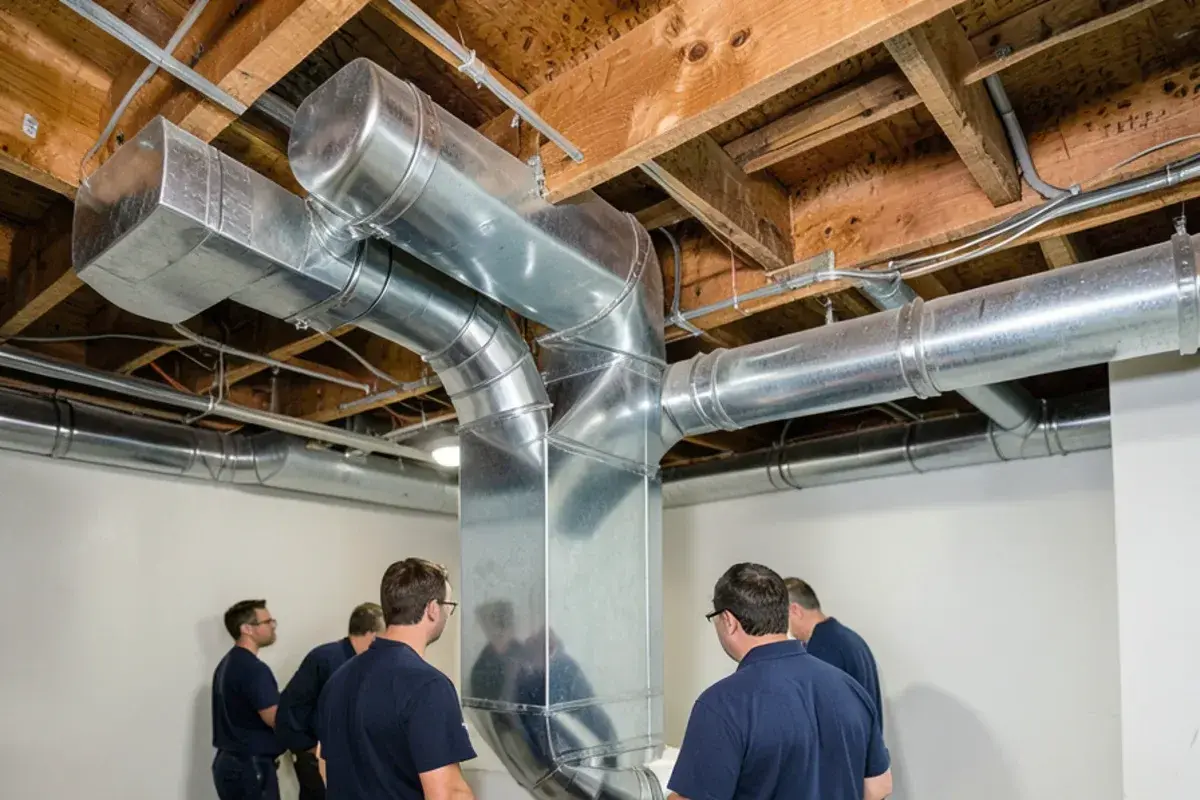
- Is duct work included, and what does it cover?
- Who pulls the permit, and what does the municipality require?
- What does the warranty cover, for the parts and for the labor?
Good answers are specific. Vague ones are worth a second look.
What is the next step?
Call us and describe what you have: the age, the symptoms and the heat in each room. We will tell you honestly whether repair or replacement makes sense. We cover West Seneca, about 12 minutes from our Orchard Park base. The number is (321) 666-8870. Our office is open Monday through Friday, 7:30 AM to 5:00 PM.
Quick answers
Why does one furnace quote cost thousands more than another?
The equipment, the scope and the sizing method usually differ. One quote may be a like-for-like swap, another may include new venting, a new thermostat and duct fixes. Ask each contractor for the model, the heating capacity, whether a Manual J load calculation was done, and what is included. Compare the lists, not just the totals.
Is a high-efficiency furnace worth the extra cost in Buffalo?
It often is in a long heating season. Buffalo averages about 6,466 heating degree days a year, according to NOAA's 1991-2020 normals, so efficiency pays back faster than in a mild climate. The catch is venting and condensate drainage, which can add cost in an older house. We run the numbers for your home before recommending it.
Do I need a permit to replace a furnace?
Usually yes, and the rules are local. The City of Buffalo requires a Heating Contractor license for heating work and routes it through Permit and Inspection Services. Other towns have their own rules, so confirm with your municipality. Ask any contractor who pulls the permit. Work started before a permit can be charged double fees in Buffalo.
Sources
- NerdWallet, Cost to Replace a Furnace, citing Angi 2026 data
- ServiceAgent, Furnace Replacement Cost in 2026 (aggregator estimates)
- ENERGY STAR, key product criteria for furnaces
- National Fuel, Fall 2025 customer newsletter (gas appliance incentives ended January 1, 2026)
- NOAA 1991-2020 climate normals, Buffalo heating degree days
- City of Buffalo, Fuel Devices office