
Comparison Guides
Ductless Mini Split vs Central Air
By John Gach, owner of Vantage Heating and Cooling · Published · Updated
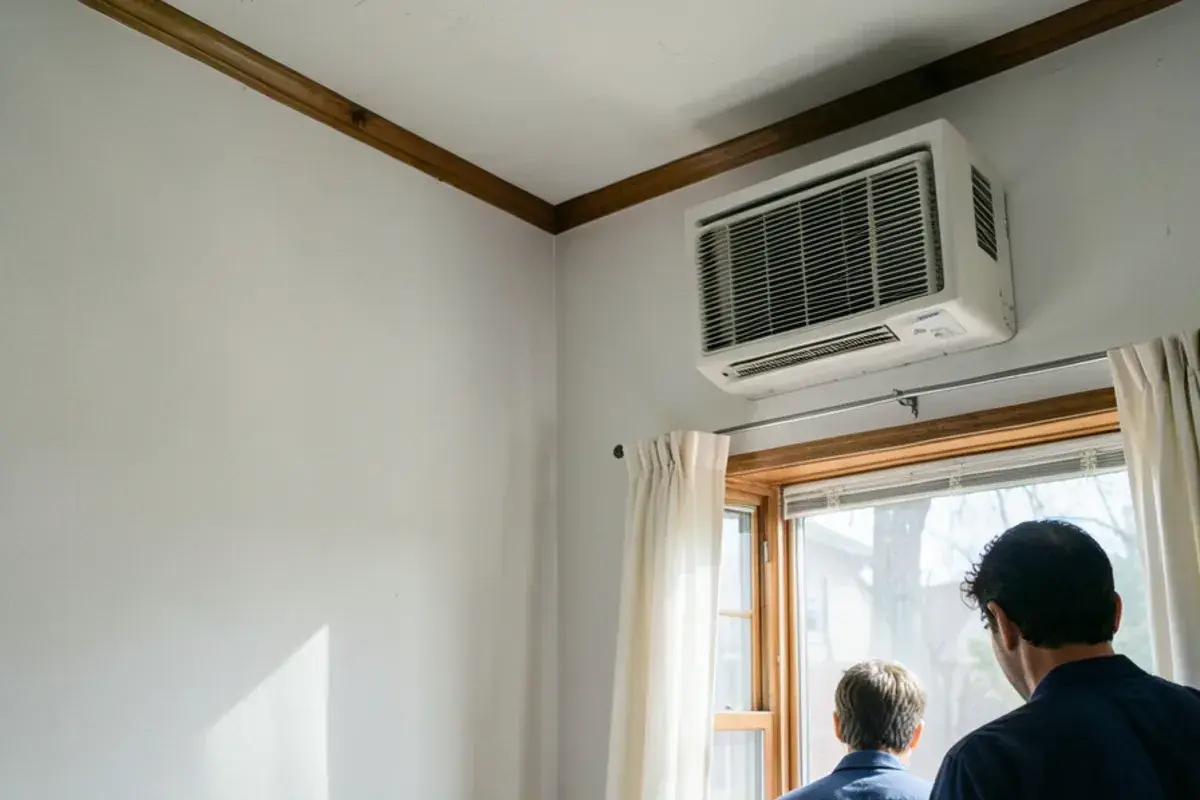
A ductless mini split usually wins over central air in a house with no usable ducts, and central air usually wins when good ductwork is already in place. Everything else, from comfort to cost, follows from that one fact. This guide covers how to tell which side your house is on.
How do the two systems actually differ?
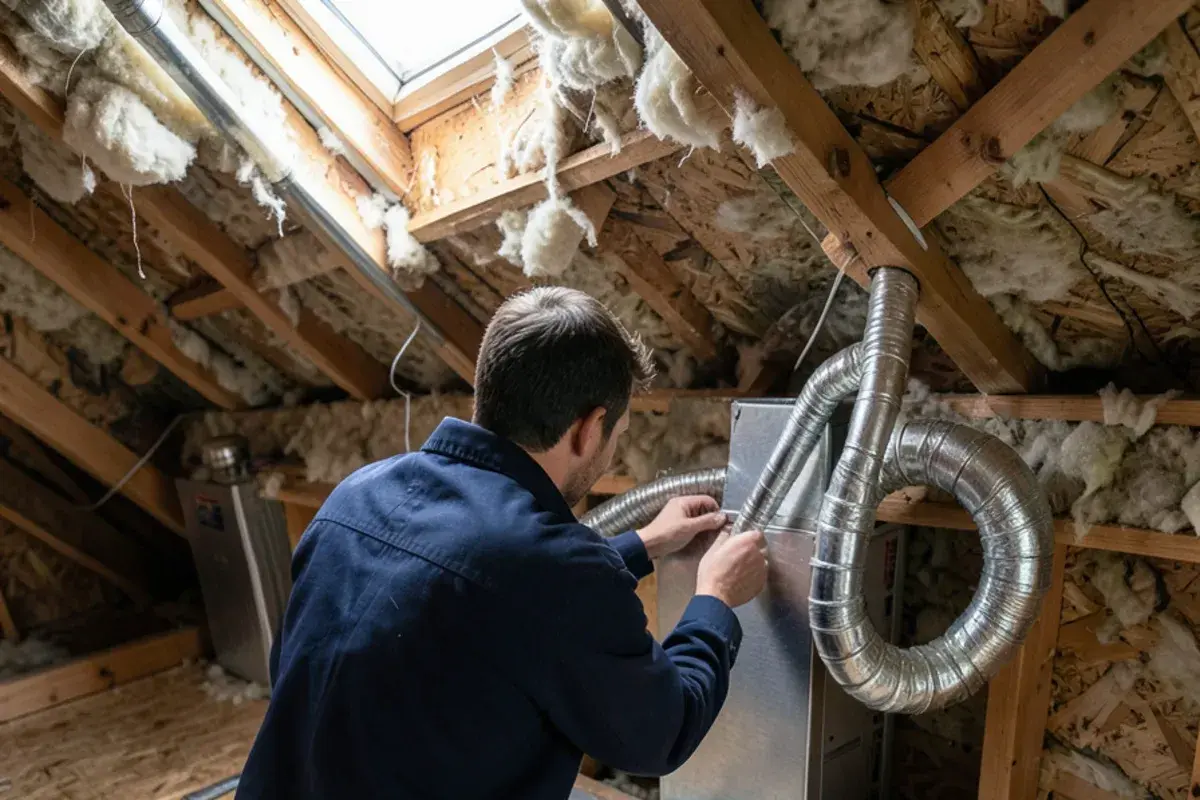
Central air cools the whole house from one indoor coil, usually on top of the furnace or air handler, and sends the air through ducts to every room. One outdoor unit, one thermostat, one set of registers.
A mini split puts the cooling coil in a slim indoor unit mounted in the room, joined to an outdoor unit by a small refrigerant line set. Each indoor unit has its own temperature control. Many models also heat, which matters if you want a second source of heat in a cold room.
Does duct loss make central air less efficient?
It can. A U.S. Department of Energy HVAC guide says duct heat losses can reach 30 percent or more when ducts are leaky, poorly insulated and run through an uninsulated attic or crawlspace. Ductless systems have no ducts to lose air from.
That figure is a ceiling, not a promise. Ducts in a conditioned basement, well sealed and insulated, lose far less. The point is that the condition of the ducts matters more than the name of the system. Our post on signs your ductwork is leaking shows what to look for.
Which one fits an older Buffalo house?
A lot of the housing in our area predates common central air. In Buffalo, Census data via Point2Homes shows about 61 percent of the city's housing units date to 1939 or earlier, and many of those homes have radiators, not ducts.
That is where a mini split earns its place. It avoids tearing into plaster and framing to hide ducts. Tonawanda, Depew and other mid-century neighborhoods are different. Many of those houses already have ducts from the furnace, so central air is practical, and a ductless head can still handle a stubborn addition or upstairs room.
| Your house | Usually fits |
|---|---|
| Radiators or baseboard, no ducts | Mini split |
| Good ducts from a forced-air furnace | Central air |
| Ducts in poor shape, leaky or undersized | Repair the ducts, or mini split |
| One hot room, such as an attic or addition | Single-zone mini split |
| Whole-house cooling and heating | Either, sized by load |
How many rooms can one mini split serve, and where do the lines go?
The Department of Energy says many multi-zone models support up to four indoor units on one outdoor unit, each conditioning its own room. That is a ceiling for the equipment, and the number that makes sense for your house is often lower. Two heads on a single outdoor unit is a common, practical size for a second floor or a pair of rooms.
The refrigerant lines are the part people worry about. ENERGY STAR notes that they can run through closets, stairways, basements, crawlspaces or attics to limit wall and ceiling patching. In a plaster house that matters, because a chase through a closet is far kinder to the walls than a new opening in every room. We plan the route before we plan the equipment, since a long, awkward run is one of the things that raises the price.
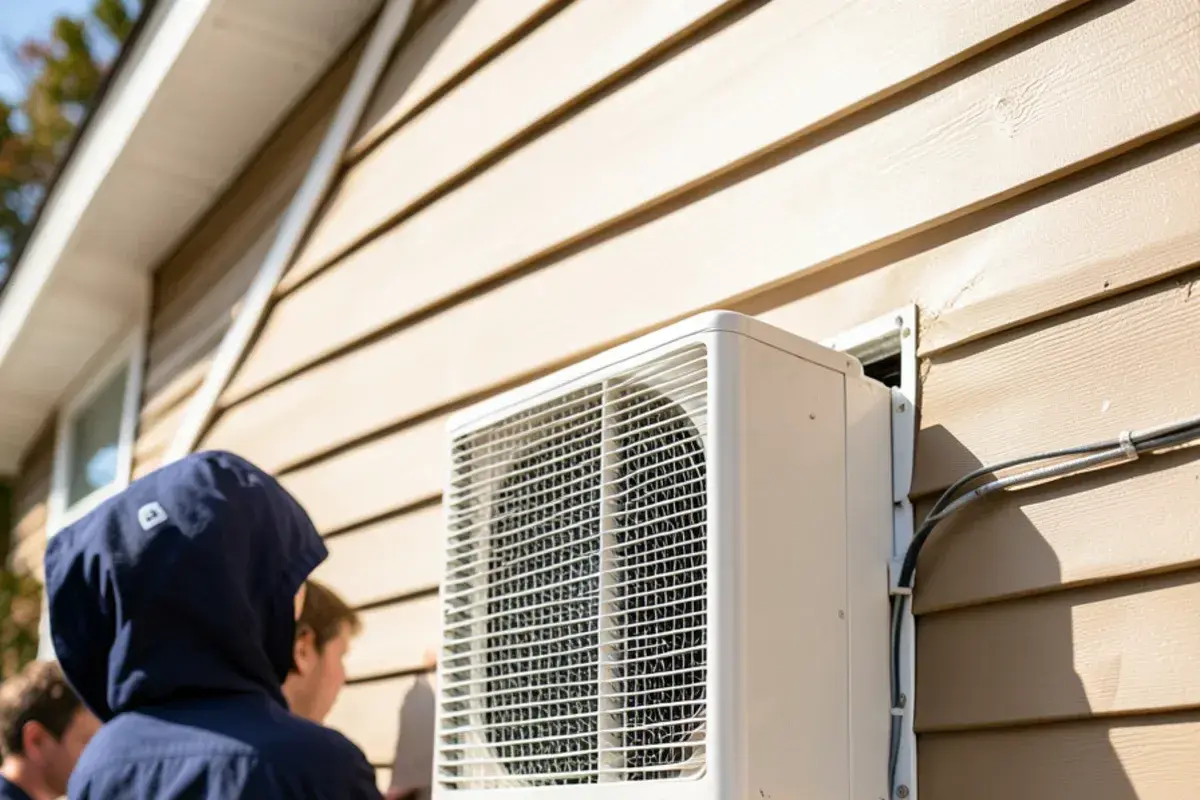
Where the outdoor unit sits matters as well. ENERGY STAR advises keeping it clear of doors and windows because it sheds water during winter defrost cycles. In snow country we add one more rule: mount it on a bracket or stand above the typical snow line, and keep it away from the edge of a roof that sheds ice.
Which one handles a Buffalo winter better?
That question only applies if you want the system to heat as well as cool. A central air conditioner cools only. It relies on the furnace or boiler for heat. A mini split that is also a heat pump can supply heat, and ENERGY STAR's cold-climate certification requires third-party verified testing of performance down to 5°F.
Buffalo averages about 6,466 heating degree days a year, according to NOAA normals, so a ductless heat pump in a bedroom or addition is usually a supplement to the main heat, not the whole plan. ENERGY STAR itself notes that a backup heat source can improve efficiency when temperatures drop lower still. If you are heating a whole house with ductless heads, ask for the heat loss calculation and the capacity at your design temperature. Our heat pump installation page explains how we think about that.
Does sizing change how a system dehumidifies?
Yes, and it matters in a humid Buffalo August. An air conditioner removes moisture when its coil runs long enough to condense it. A unit that is too large cools the room fast, shuts off, and leaves the air clammy. ENERGY STAR says your contractor should verify the proper size for your home using a Manual J calculation, and that oversized or undersized systems perform poorly.
This applies to both options. It is the main reason we avoid matching a new unit to the old tonnage, and it is a particular risk with mini splits, because a head that is much larger than the room it serves will cycle on and off. Ask for the room-by-room load, not only the total.
What does each cost?
We do not publish prices, and any figure you see online covers a range of houses. The cost drivers are what matter:
- Central air with existing ducts costs the least, because the work is mostly the outdoor unit and coil.
- Central air with new ducts costs far more, since ductwork is the largest part of the job.
- A mini split costs more per room the more heads you add, so one or two zones is where it is most competitive.
- Electrical work can add to either system.
A mini split with five or six heads can cost as much as a ducted system. A mini split with one or two heads for a few rooms often costs much less than adding ducts. We give you a clear quote before any work starts, so you can compare.
How do comfort and upkeep compare?
Mini splits control temperature room by room, which suits households that disagree about the thermostat. They also run quietly. The trade-off is appearance: you will see the indoor units on the wall.
Central air is invisible and cools every room evenly when the ducts are sound. It also relies on the furnace blower, so airflow problems in your heating system affect cooling too.
Both need upkeep. Mini split filters need regular cleaning, and both coils and drains collect buildup. Our ductless mini split page explains what installation and care involve.

What questions settle it before anyone quotes?
Walk through these first. They will probably tell you which way your house leans.
- Do you have ducts now, and where do they run? Ducts in a conditioned basement are a different case from ducts in a hot attic.
- Is the furnace staying? Central air shares the furnace blower, so a furnace that is near replacement changes the plan.
- Which rooms are uncomfortable? If the answer is one or two, a single-zone or two-zone mini split may fix it without touching the rest of the house.
- Do you want the heat pump to heat? If so, ask about capacity at low temperatures and where the backup will come from.
- How do you feel about wall units? Some people dislike them, and that is a fair reason to choose ducts.
- Is a duct repair worth doing first? If the ducts are sound but leaky, sealing them can be the cheapest improvement. See our duct repair page.
How we weigh ductless against ducted systems
We walk the house before we say anything about equipment. In a forced-air home we look at the ducts, the furnace blower and the room-by-room airflow. In a house with radiators, we look at where heads could go and how the refrigerant lines would run.
The recommendation follows from what we find. If the ducts are good, we say central air is the simpler job. If they are not, we explain whether sealing and repair would make sense or whether a ductless system avoids the problem. Either way you get a clear quote before work starts.
Ready to compare?
Tell us what you have now, which rooms are uncomfortable, and whether you want heat from the same system. In Depew and around Erie County, call (321) 666-8870. If a full AC replacement is the better fit, we will say so. For a house that already has a hard-to-cool room, a ductless mini split may be the cleanest answer.
Quick answers
Is a mini split better than central air for an older home?
Often, when the house has no ducts or the ducts are in poor shape. A mini split needs only a small hole through the wall for each indoor unit. If your home already has sound ductwork with good airflow, central air can be the simpler choice. We look at the ducts before recommending either one.
How many indoor units does a mini split system need?
One per zone, which usually means one per room or one per open area. A single outdoor unit can feed several indoor heads, and the right count depends on how the rooms are laid out and used. A heat load calculation, not a rule of thumb, should set the number and size of each head.
How much upkeep does a mini split take?
Less than most people expect, but not none. The filters in each indoor unit need regular cleaning, and the outdoor unit needs clear space and a seasonal checkup. The indoor coil and drain also collect dust and buildup, so a yearly service visit is a good habit for either system type.